
How to Land a Remote Product Manager Job (35% Pay Bump Case Study)
Alex started his job search in June.
Four months later, he signed an offer for a fully remote product manager role that pays about 35% more than his last job.
He did it while working full time and becoming a new dad. I sat down with him for 30 minutes to break down exactly how. Here’s his playbook.
Key Takeaways
- The result: A fully remote product manager role with a roughly 35% pay increase.
- The timeline: About 4 months, with interviews at around 15 companies.
- The tools: Two AI job search tools, including one that messages hiring managers directly on LinkedIn. That tool landed him the offer.
- The schedule: One protected hour every morning, plus interviews booked over lunch.
- The mindset: Play the volume game, and don’t take rejections personally.
Who Is Alex?
Alex studied chemical engineering at Cornell and graduated in 2016. He’s spent about 10 years in product and strategy roles in healthcare. He’s worked with health plans serving tens of millions of people and with tiny startups serving a handful of customers.
His last role was a dead end. So he started looking.
He just accepted a product role on the network products team at Highmark Health, a large health insurer. The job is fully remote, and it pays about 35% more than his last one.
“Market’s crazy challenging right now.”
Takeaway: You don’t need a dream job to make a great move. A role that pays more and buys you time to aim higher is a win.
What “Remote” Actually Means at a Big Company
Not every “remote” job is fully remote.
Alex’s new company has a headquarters in Pittsburgh.
Employees who live within 50 miles of the office have to come in.
Alex lives in Chicago, so he’s fully remote.
He expects to visit headquarters two or three times a year.
- His manager is based in Connecticut, and other teammates are in Kansas City.
- He also expects saner hours.
- His last fully remote jobs were at seed-stage startups, where Slack went off at all hours.
- At a large company, things slow down around 5 p.m. because everyone else logs off.
The lifestyle math matters too. In his last role, some coworkers commuted two hours each way by train. Alex now skips a one-hour commute each way through Chicago winters.
Takeaway: Ask about the office radius policy before you accept. “Remote” can come with fine print.
Why the Product Manager Job Market Feels Harder Now
Alex has job hunted before. He says this round was the most competitive he’s seen.
Three things stood out:
- Speed matters. You need to apply as soon as a job posts.
- Volume matters. The number of applications needed to land interviews is very high.
- Companies are unsure what they want. Roles get posted that don’t make sense. Others get reposted for months without being filled.
One example: a recruiter pitched Alex a role at a well-respected Chicago startup in May.
Months later, he saw the same company repost the same job on LinkedIn.
They’d been trying to fill it for four or five months.
Takeaway: A slow or silent hiring process often says more about the company than about you.
The 2 AI Job Search Tools He Used
Alex says using an AI tool is now close to a requirement. The volume is too high to apply by hand. He used two.
Tool 1: LinkedIn outreach to hiring managers GetInterviews.ai
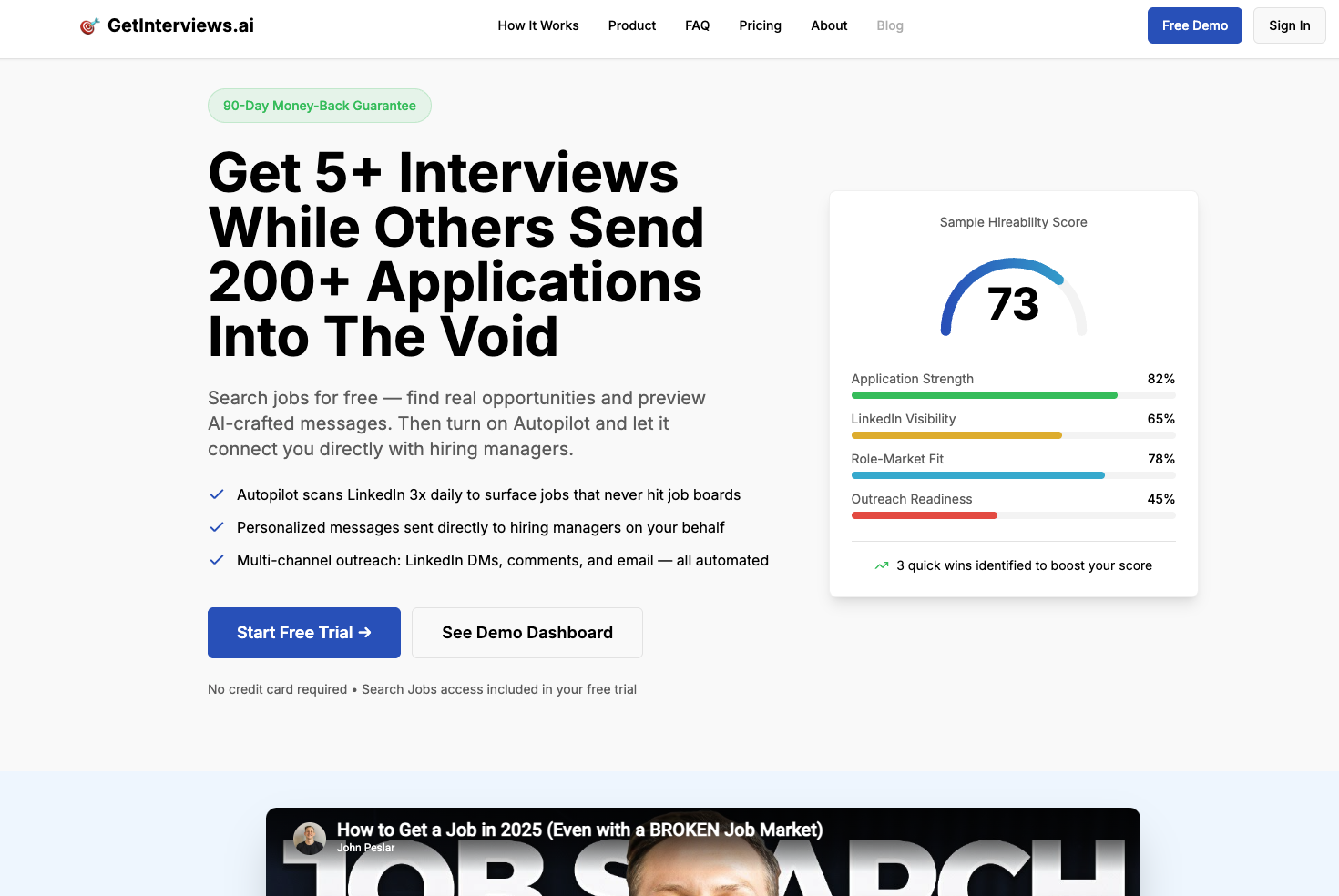
This is the tool that landed his offer. Every day, it scans LinkedIn for hiring managers posting things like “I’m hiring for X, reach out if this fits you.” Then it sends each manager a short two- or three-sentence message explaining how your background fits.
Cost: About $147 a month at the price Alex locked in. He went month to month.
The limits: The targeting wasn’t precise. It messaged roles far outside product management, including a head of retail sales role at a cat litter brand. The hiring manager wrote back, politely, asking what they were missing. He also couldn’t limit it to Chicago or remote roles, so it reached out about on-site jobs in states he had no plans to move to.
Was it worth it? Alex says the new job paid for it with his first paycheck.
Tool 2: Auto-apply with match scores Simplify.jobs
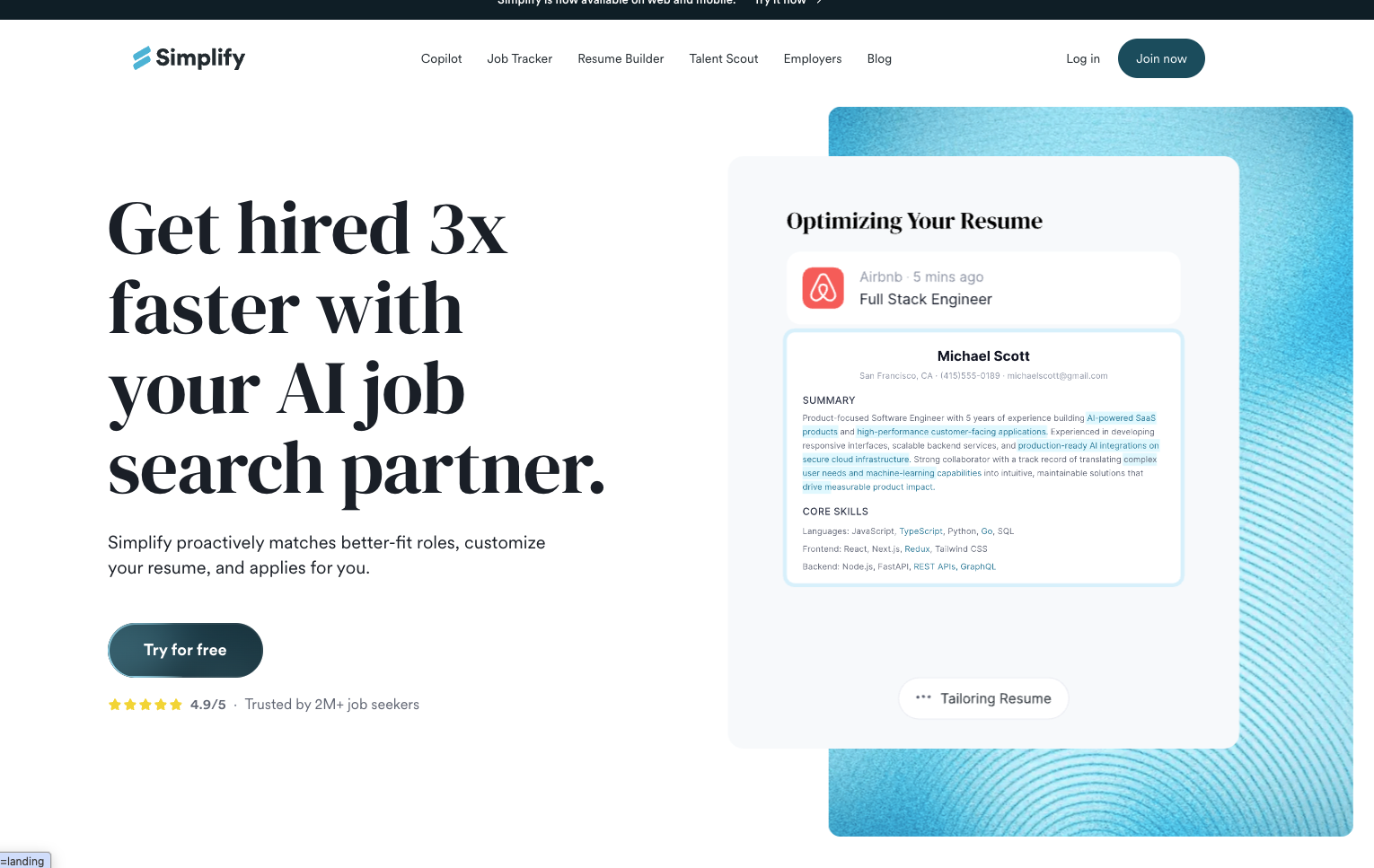
This tool scores each job against your profile, like 70% or 100% match. You set a threshold, such as “apply to everything 85% or higher,” and it applies for you.
Cost: About $60 a month for premium. A free plan allows a few applications per day.
Result: Alex says it got him “quite a few interviews.”
Takeaway: No single AI tool works for everyone. I tell our folks to treat these like streaming services: try one for a month, and switch if it isn’t producing.
His Daily Job Search Schedule
Alex was working full time, studying, and preparing for a new baby.
Here’s how he fit the search in:
- Mornings: He got up one hour earlier than usual. That hour went to studying, replying to recruiters, and managing his AI tools.
- Midday: He booked interviews over lunch, when his coworkers were also away.
- Evenings: He picked up anything left over after closing his laptop.
“I wanted to make sure that I always got that time in every day.”
Why mornings? Some workdays are brutal. By evening, even good habits get skipped. Doing the work first guaranteed it got done. It also left room to enjoy his summer.
Takeaway: Protect one hour before work. Consistency beats occasional all-nighters.
5 Lessons for Your Product Manager Job Search
1. Don’t take results personally
Many companies don’t know exactly what they’re looking for. A rejection or a ghost is often about their process, not your skills.
2. Play the volume game
Assuming every company and hiring manager has it all figured out is a dangerous mistake. More applications mean more chances to find a team that does.
3. Pick the manager over the logo
I see this often when product managers compare offers. People chase a famous logo. But a great team leader matters more. A bad team makes any title or salary miserable.
4. Follow up after a rejection
Hiring decisions take longer than people expect. Some of our folks have turned rejections into offers just by following up later.
5. Treat interviews as conversations
Your goal in an interview isn’t only to get to the next round. It’s to help the company figure out what it needs. Be curious about their problem, the same way a good PM is obsessed with the customer. The process gets more enjoyable, and you’ll stand out.
Would Alex Recommend the Program?
Yes. He’s now two for two on jobs he accepted while working with us.
“Been well worth it and I’ve learned a lot.”
He says the curriculum helped him frame his experience around what hiring managers actually look for. He also valued the community. It’s hard to find people going through the same search at the same time.
Frequently Asked Questions
How long does it take to get a remote product manager job?
For Alex, about four months. He started in June and interviewed with around 15 companies before accepting an offer.
Are AI job application tools worth it?
For Alex, yes. A LinkedIn outreach tool costing about $147 a month led to an offer with a roughly 35% raise. Results vary by person, so test one tool for a month before committing.
Is a remote product manager job always fully remote?
No. Some large companies require employees who live near an office to come in. Alex’s company requires in-office work for anyone within 50 miles of headquarters.
How do you job search while working full time?
Protect a fixed time block. Alex woke up an hour early every day and scheduled interviews over lunch.
Your Turn: Make Your Move Into AI Product Management
Alex’s next goal is a product role at an AI company. That’s where the market is heading, and it’s what our program is built for.
Book a free 30-minute strategy session with our team. We’ll look at your background, show you where you stand for AI product manager roles, and map the path to your next offer. If our program isn’t the right fit, we’ll tell you. We only take people we’re confident we can place.