How to Pass the Palantir Forward Deployed Engineer Interview: The Complete 2026 Guide
A Quick Disclaimer Before We Start
We are not here to guarantee you a forward deployed engineering role at Palantir. Nobody can honestly make that promise and anybody who does is selling you something you should not buy.
What we can tell you is this. The tips in this guide are tried, tested, and proven across real candidates we have worked with as approved recruiters on the Paraform platform. We have direct access to some of the hiring managers filling these roles.
We have real rejection feedback from real candidates who did not make it.
Every tip in this guide will meaningfully increase your chances of passing the Palantir FDE interview. The last tip in particular will change how you think about this entire process.
Read this all the way through because it matters.
Why Most People Fail the Palantir FDE Interview Before It Even Starts
Here is the uncomfortable truth about the Palantir forward deployed engineering interview.
Most candidates who fail do not fail because they cannot do the job. They fail because they prepared for the wrong interview.
They downloaded the job description, fed it into ChatGPT, generated a list of generic behavioral questions, rehearsed their answers alone in their bedroom, and walked into one of the most rigorous interview processes in all of technology thinking they were ready.
They were not ready.
The Palantir FDE interview is not a standard software engineering loop.
It is not LeetCode and behavioral questions. It is a multi-stage process specifically designed to evaluate whether you can do the thing the role actually requires — walk into a client organization, understand a business problem that nobody has fully defined for you, build something that solves it, communicate what you built to people who did not study computer science, and keep the client and the company out of trouble simultaneously.
Preparing for that with a ChatGPT-generated question list is like training for a boxing match by reading about boxing.
This guide is going to show you how to actually prepare. Not just study. Prepare.
The Strategy Overview: What Winning Actually Looks Like
Before we get into the specific tips, here is the framework that ties everything together.
Winning the Palantir FDE interview requires five things working simultaneously.
- You need intelligence — direct access to what the hiring team is actually looking for from the specific team you are interviewing with, not just the generic job description.
- You need context — real time rejection feedback from candidates who failed before you, so you know the patterns that get people passed over and can get ahead of them.
- You need preparation — a customized interview cheat sheet that cross-references your specific background against what the role requires, identifies your red flags, and gives you stories backed by metrics that address those red flags directly.
- You need practice — real mock interview hours with real partners who can tell you honestly where you are falling short before a Palantir interviewer does.
- You need reps — actual FDE interviews at other companies before you sit across from Palantir, so that the Palantir interview is not the first FDE interview you have ever done in your life.
Most candidates have zero of these five things when they walk in. A few have one or two. The candidates who get offers almost always have all five.
Let us build each one.
Hot Tip 1: Gain Direct Access to the Hiring Manager
The single biggest advantage any candidate can have going into the Palantir FDE interview is knowing what the specific hiring team is actually looking for — not what the job description says, which is often months out of date and frequently copied from a document that predates the current version of the role by years.
Here is what most candidates do not know.
TechCareers.io is an approved recruiter on the Paraform platform.
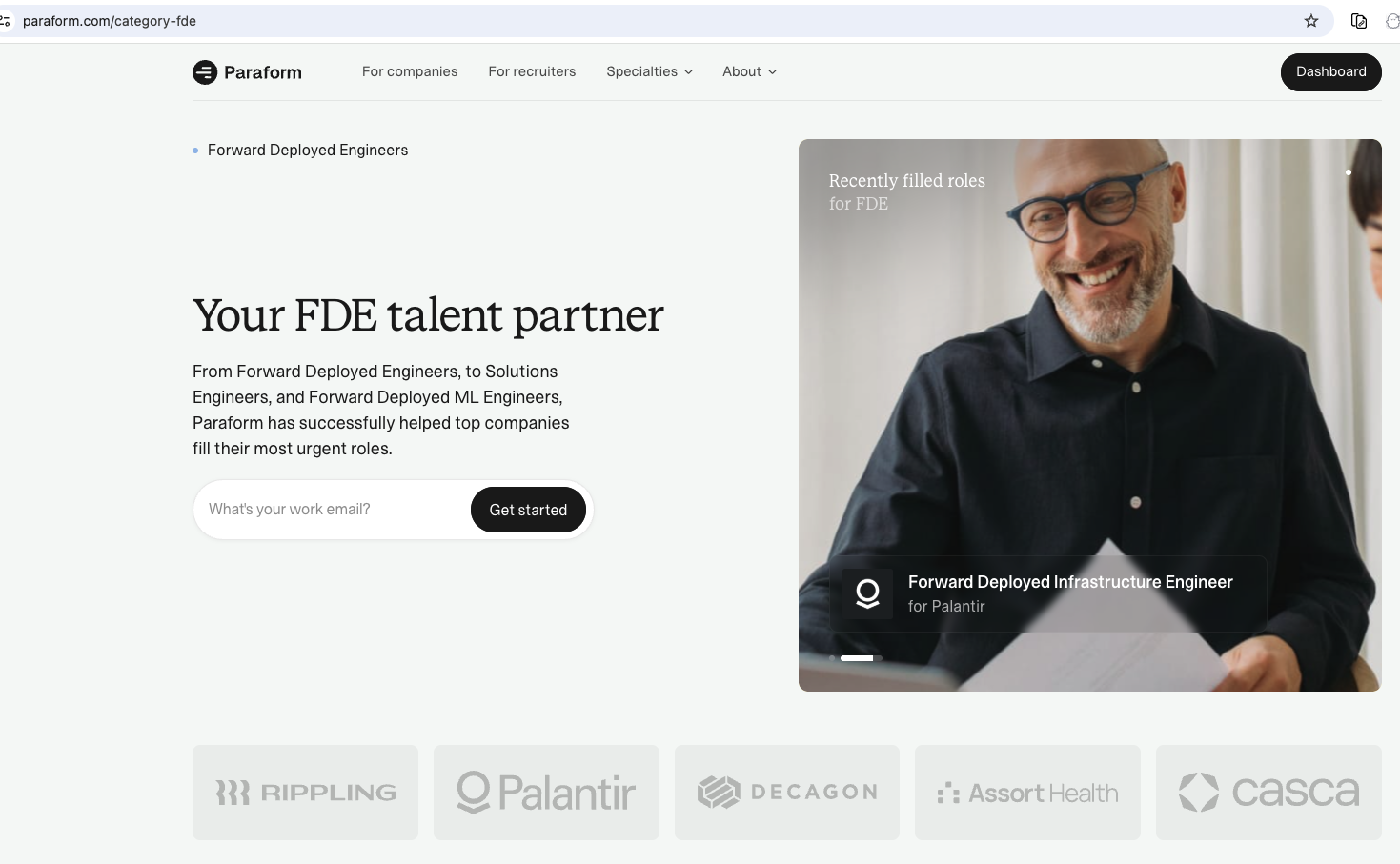
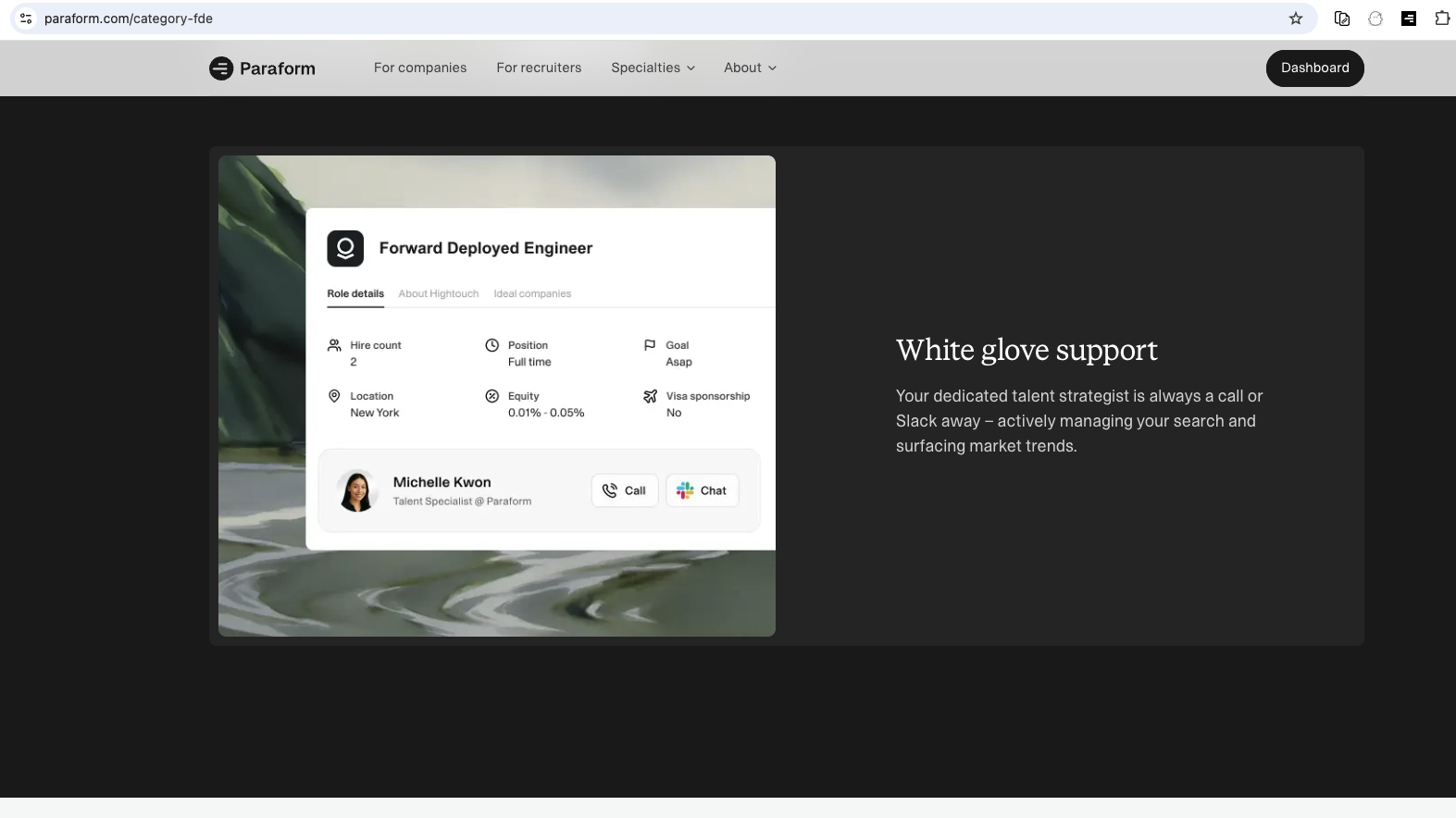
Paraform is the recruiting infrastructure that many of the highest-growth technology companies use to find and screen FDE talent.
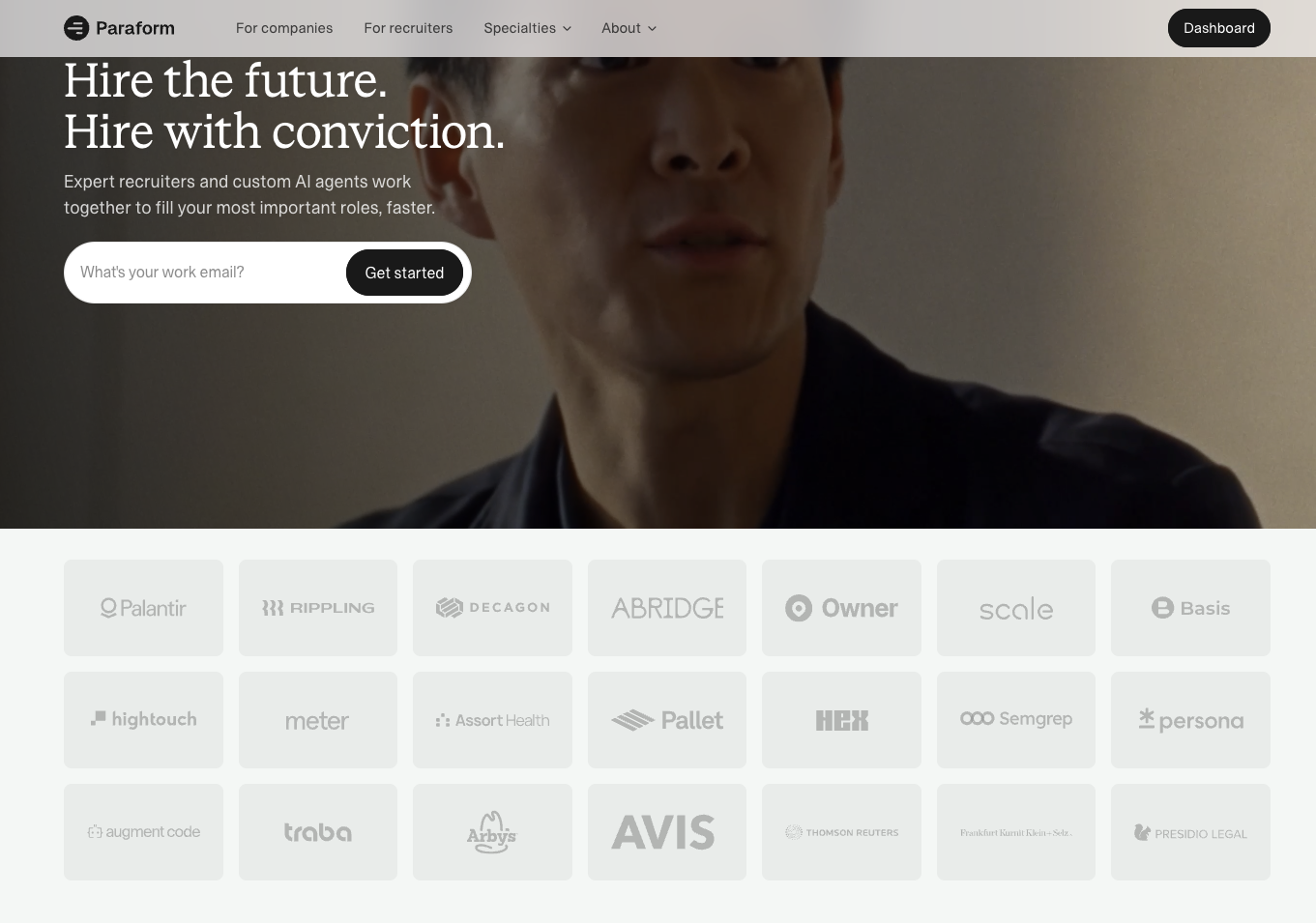
Palantir is one of the companies actively recruiting through the platform.
Here is what makes this relevant to you specifically.
Shyam Sankar — the CTO of Palantir, the person who coined the term forward deployed engineer, the person who invented the role in 2010 and 2011, and the person whose vision for what an FDE should be and do has shaped every forward deployed engineering department at every company since — is one of the angel investors in Paraform.
https://www.paraform.com/category-fde
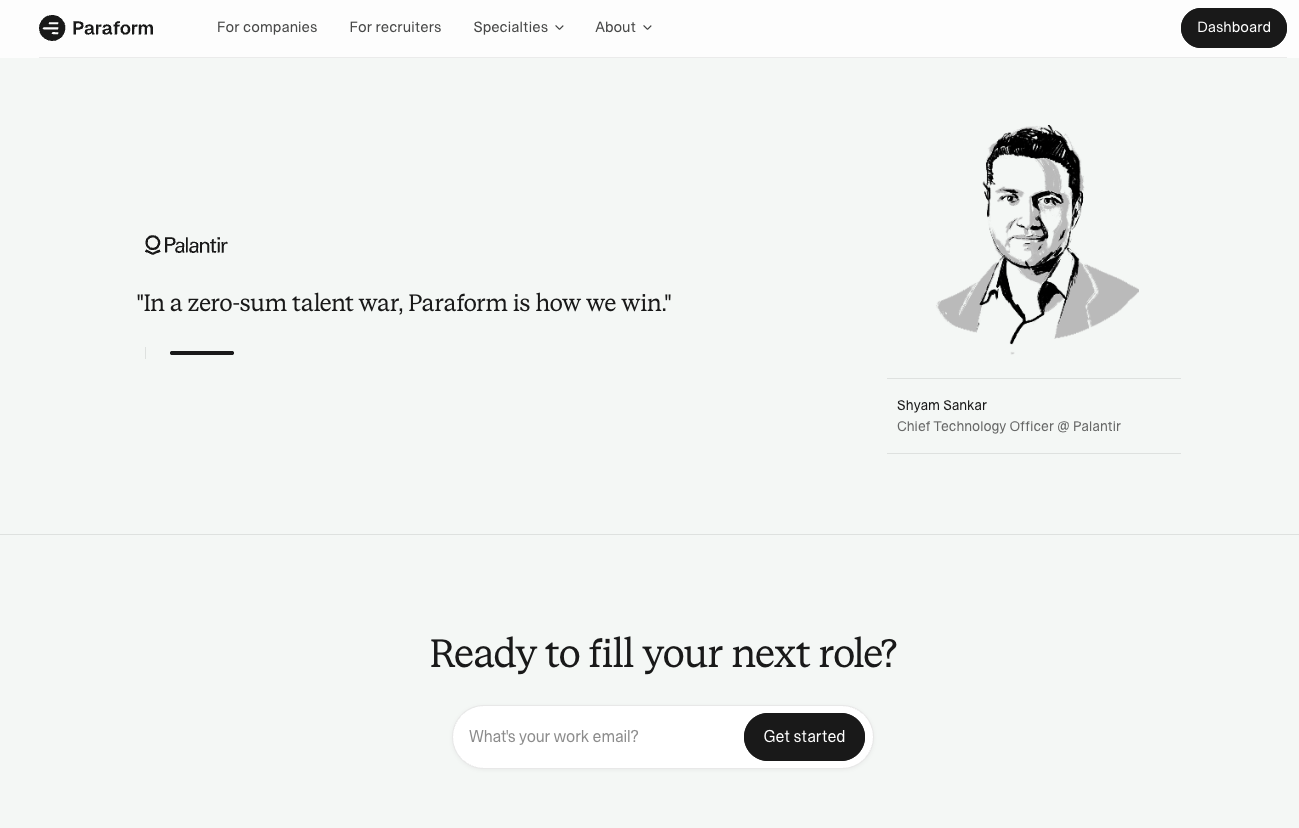
That relationship is not a coincidence. It is a recognition that the problem Paraform is solving — connecting companies with the right forward deployed engineering talent — is the same problem Shyam Sankar has been trying to solve since Palantir first needed to build an FDE team.
https://www.paraform.com/about
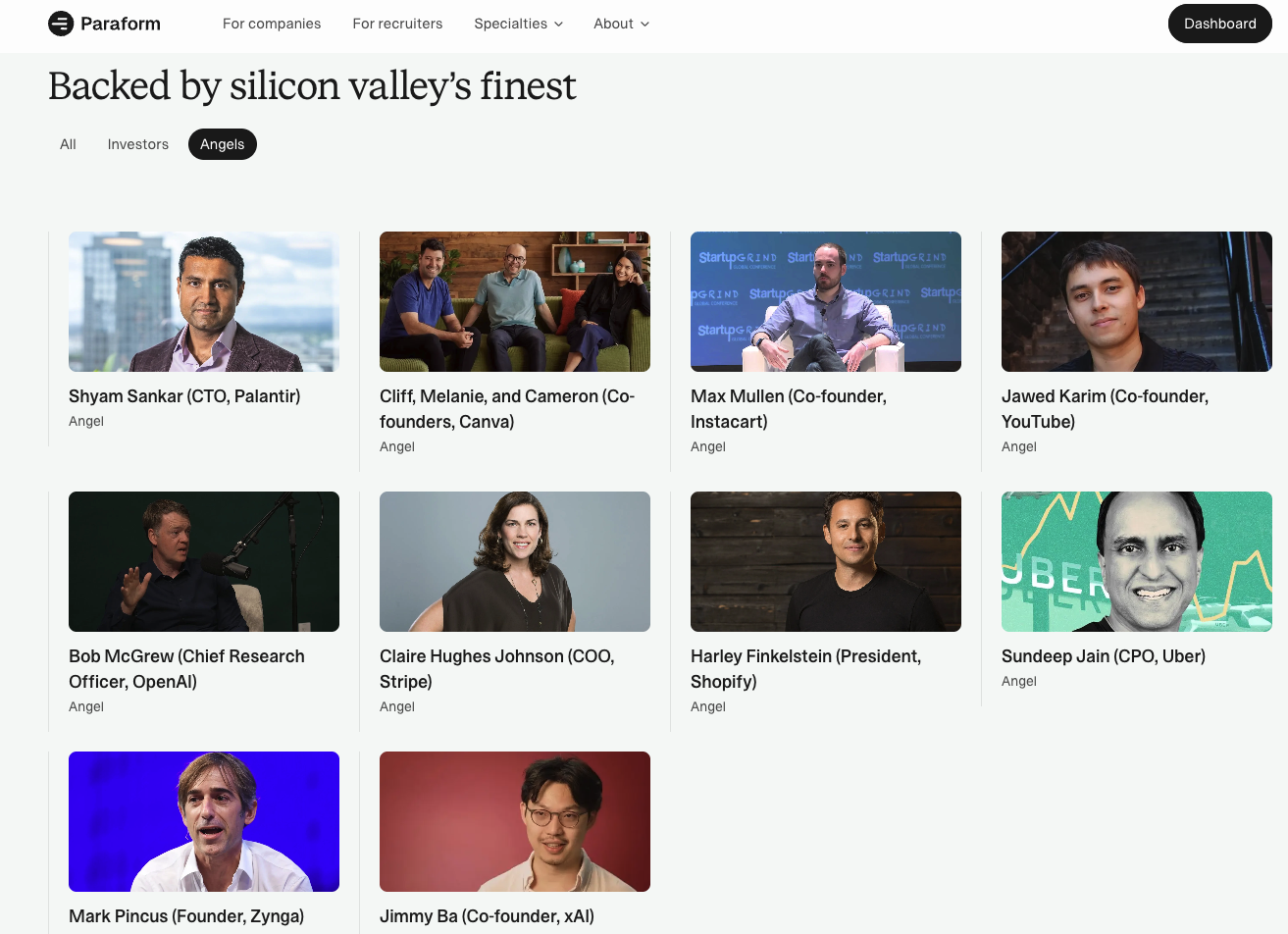
What this means for you practically is the following.
Every company that recruits through Paraform, including Palantir, conducts a recorded video interview with a member of the Paraform team. That interview goes deep. It covers exactly what type of person they are looking to hire, what teams they are building for and what each team requires, what kinds of forward deployed engineers have worked out for them in the past, who is definitively not a good fit, what they are flexible on, and what the culture fit looks like for their specific team.
This is not a job description. It is a hiring manager telling you directly, on video, exactly what they want. And we have access to it.
The difference between walking into a Palantir interview with and without this intelligence is the difference between studying for a test with the answer key and studying without it. The material is the same. The preparation is completely different.
As a recruiter on the platform we also have another advantage that most candidates will never have access to. If a company's initial reaction to your profile is a no — maybe your background does not fit their standard profile on paper — we can go to bat for you.
We can make the case for why your specific experience and domain knowledge makes you a stronger candidate than the job description would suggest.
We recently helped a candidate get a forward deployed engineering interview at a company that had stated they were only hiring computer science graduates from top 50 universities.
This candidate did not have that background.
What they had was deep, specific domain expertise that the hiring team needed and could not find elsewhere.
We made that case and the candidate got the interview.
You cannot do that if you have no communication channel with the hiring team.
Getting rejected from an application portal means getting passed over silently with no opportunity to push back.
The common mistake: applying cold through a job portal and hoping the resume speaks for itself.
The winning move: getting plugged into the recruiter infrastructure that already has relationships with the people making the hiring decisions.
Hot Tip 2: Study Past Candidate Rejection Feedback
Most candidates try to figure out what Palantir is looking for by reading the job description and watching YouTube videos about the interview. This is fine as a starting point and completely insufficient as a preparation strategy.
Here is the thing about job descriptions. They tell you what the company wants. They do not tell you why the last fifty candidates who had what the company wanted still did not get the offer.
Past candidate rejection feedback does.
Through the Paraform platform, TechCareers.io has access to a database of actual rejection feedback from candidates who have gone through the FDE interview process at Palantir and the other companies in the Palantir FDE ecosystem.
This data tells us what the most common failure patterns look like. It tells us which skills gaps are disqualifying versus which ones a strong candidate can overcome with the right stories.
It tells us how the role has evolved — because market conditions change, the FDE function at Palantir has changed significantly since it was first built, and the job description on the website is almost never fully current.
This information does not exist anywhere else in this form.
It is not on Glassdoor. It is not on Blind. It is not in any Reddit thread or YouTube video. It exists on the Paraform platform and through the recruiter relationships we have built working in this ecosystem.
The common mistake: preparing for the interview version of the role that existed when the job description was written, which may be months or years behind where the role actually is today.
The winning move: understanding exactly why recent candidates failed so you can get ahead of those same failure patterns before you walk in.
Hot Tip 3: Build a Customized Interview Cheat Sheet With Your Stories and Metrics
Here is where most candidates who have done tips one and two still fall short.
Having the hiring manager intelligence and the rejection feedback is necessary. It is not sufficient. What you do with that information is what determines whether it helps you or not.
The step most people skip is cross-referencing everything they know about what the role requires against their own specific background to identify exactly where they are going to fall short in the interview — and then building the stories and metrics that address those shortcomings before the interviewer surfaces them.
There is no candidate anywhere who has everything a company is looking for. That candidate does not exist.
What separates the candidates who get offers from the ones who do not is not that the successful candidates had fewer gaps. It is that they were aware of their gaps and came prepared to address them honestly, with specific examples and measurable outcomes.
Here is what that looks like in practice.
If you are coming from a software engineering background and transitioning to FDE, one of the most common rejection patterns we see is candidates who cannot demonstrate enough customer-facing experience.
- They can build.
- They cannot show that they can sit in front of a CFO and earn trust.
- The cheat sheet for a software engineer needs to surface every story in their background that demonstrates customer-facing work and front-load those stories in the interview.
If you are coming from a product management, management consulting, or customer success background, the most common rejection pattern is the inverse.
- The candidate can communicate.
- They cannot demonstrate that they can actually build something technical in a client environment.
- The cheat sheet for a non-technical candidate needs to surface every example of hands-on technical work — even if it was not their primary function — and build those into stories with specific technical outcomes.
What we do in our program is take the hiring manager intelligence, the rejection feedback, and your resume and background, and build a document that lays out your strongest stories for this specific role, identifies the moments in the interview where your shortcomings are most likely to surface, and gives you the language to address those moments proactively rather than reactively.
The candidates who fold under pressure in an FDE interview almost always fold at the same moment — when an interviewer asks about something they know they are weak on and they have no prepared answer. A customized cheat sheet eliminates that moment.
The common mistake: using the same stories in every FDE interview regardless of which company or which team you are interviewing with.
The winning move: building a document that is specifically designed for your background versus this company's specific requirements, so that your weaknesses become talking points instead of surprises.
Hot Tip 4: Get Three to Five Mock Interview Hours With Real Partners
Here is the part of this guide that most people read, nod at, and then do not actually do.
You need a minimum of three to five mock interview hours with three to five different partners before you walk into a Palantir FDE interview.
That is not a suggestion. That is the baseline standard for being competitive.
Here is why this number matters.
The Palantir FDE interview process involves multiple rounds with experienced interviewers who have each logged between 50 and 100 hours of FDE interviewing time.
They have seen hundreds of candidates.
They know what a prepared candidate looks and sounds like versus an unprepared one.
They can tell within the first five minutes of a decomposition case study whether a candidate has actually practiced communicating under ambiguity or whether they are doing it for the first time.
The forward deployed engineering role is communication-first. Technical skills are the baseline.
The interview is measuring whether you can think clearly and communicate precisely when the problem in front of you is half-defined and you do not have enough information to be certain. You cannot develop that ability by studying. You develop it by doing it with real people who give you real feedback.
Most candidates make the following mistake. They put the job description into an AI tool, generate a list of questions, and practice answering those questions by themselves. This is the equivalent of training for a championship fight by shadowboxing in your living room. The physical mechanics are similar. The experience is completely different.
In a real interview, an interviewer pushes back. They ask follow-up questions you were not expecting. They probe the edges of your answer to see if your understanding is shallow or deep. They watch how you handle being wrong or uncertain. None of that happens when you are practicing alone.
In our program, mock interview partners work with you using the actual questions and scenarios we know the hiring manager cares about — because we have access to that information through the platform. The mock interviews are not generic. They are calibrated to the specific team and role you are interviewing for.
Beyond the quality of the practice, the number of partners matters as much as the number of hours. Different partners surface different weaknesses. What one partner lets slide, another will probe. Getting feedback from five different people forces you to develop answers that hold up under multiple styles of questioning.
A good forward deployed engineer walks into a client site and makes a room full of skeptical executives feel like they are talking to a trusted advisor they have known for years. That does not happen by accident. It happens because you have had enough real conversations with real people that your communication has become natural rather than rehearsed.
The common mistake: practicing alone with AI-generated questions and believing that familiarity with the content is the same as readiness to perform under pressure.
The winning move: three to five hours with three to five partners using questions and scenarios calibrated to the specific team and role, with honest feedback after every session.
Hot Tip 5: Practice Interviews With Palantir Alumni Companies First
This is the tip that will have the biggest impact on your outcome if you apply it. And it is the one most candidates skip because they do not know it is possible.
One of the biggest mistakes anyone makes going into a Palantir FDE interview is making it the first FDE interview they have ever done.
Forward deployed engineering has been around since 2010. But the role did not become widely known or widely applied for until the last 18 months.
The result is a large number of candidates who are walking into their first ever FDE interview at one of the most demanding and well-established FDE programs in existence.
The Palantir FDE interview team has been conducting these interviews for over a decade. They have seen thousands of candidates.
Doing your first FDE interview with them is like playing your first chess match against a grandmaster. The experience gap is enormous and it shows up immediately.
Here is how to close that gap.
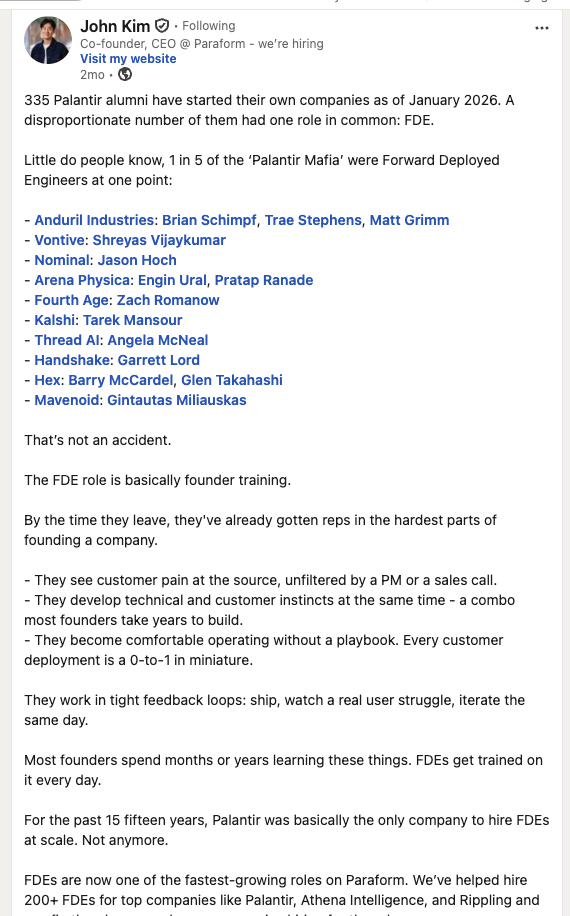
Virtually every forward deployed engineering department being built right now outside of Palantir is being led by someone who came out of Palantir.
The Palantir FDE ecosystem has produced more FDE leaders across more companies than any other organization in the world. It is frequently referred to as the Palantir FDE Mafia — and it is the most connected professional network in the FDE space.
The Paraform platform is home to many of these companies. Companies founded by Palantir FDE alumni. Companies where former Palantir FDEs are running the hiring process.
Companies where the FDE culture and the interview approach are directly modeled on what Palantir built.
This matters for you for one critical reason.
If you can get interviews at some of these companies first — companies that are rigorous and well-run but have a lower public profile than Palantir — you can log real FDE interview experience in an environment where the stakes are slightly lower.
You can find out where your stories do not land. You can identify the moments where you fold under pressure. You can get real feedback on what the FDE interview experience actually feels like from the other side of the table.
And then, when you have those reps, you walk into Palantir.
The story that captures this best involves a former US Army captain who graduated from West Point, served multiple overseas tours, had a special forces background, and was by any reasonable measure an extraordinary candidate. He applied to Stanford for his MBA because he wanted to be close to the Bay Area tech scene. He got rejected.
His friends suggested he apply to other strong programs — UCLA, USC, Northwestern, University of Chicago, NYU, Columbia. He did. He also submitted to Harvard, but he saved it for last.
By the time he was in his Harvard interview, he had done so many MBA interviews that he had developed the reps, the language, and the confidence that come only from real experience in real rooms with real interviewers. He got into Harvard even though he did not get into Stanford.
He saved the best for last.
That is the exact approach to take with Palantir. Do your practice interviews at companies where the Palantir ethos is present but the pressure is slightly lower.
Get your reps. Find out where you fall short. Fix those things. And then, when you are ready, go after Palantir.
Through the Paraform platform, we can submit you to Palantir alumni-founded companies and help you get those practice interviews lined up before the real one. If you cannot convert an interview at a lower-tier company in the FDE ecosystem, you are not ready for Palantir.
And knowing that before you walk into a Palantir interview is infinitely more useful than finding it out during one.
The common mistake: applying to Palantir first because it is the most desirable company, treating the most demanding interview as your first interview in the category.
The winning move: building your FDE interview reps at alumni companies first, banking the experience, and walking into Palantir when you are already comfortable in the interview dynamic.
Hot Tip 6: Watch the Shyam Sankar and Joe Lonsdale Podcast All the Way Through
This tip is completely within your control and it costs you nothing. It also might be the single most important thing you do to prepare for the culture fit portion of the Palantir interview.
Shyam Sankar is the CTO of Palantir and the person who invented the forward deployed engineering role. He coined the title. He built the original FDE program.
He trained the first FDEs. He has watched the role evolve from 2010 through 2026 and he has more insight into what makes a great forward deployed engineer than almost anyone alive.
Joe Lonsdale is a co-founder of Palantir.
Together, they sat down for a podcast interview that covers everything you need to understand about the role at a foundational level. The vision they had for what an FDE would be and do. The gaps they saw in the market that the role was designed to fill.
The training the original FDEs went through. The challenges of the early days of forward deployed engineering and how those challenges shaped the role into what it is today. The evolution of the FDE function from 2010 to 2026.
The kinds of people who succeeded in the role and became founders. The kinds of people who failed and why. What the interview process is designed to measure and why. What culture fit means to Palantir specifically.
This is not secondary research. This is the primary source on the role from two of the most important people in the organization. If you are walking into a Palantir FDE interview and you have not watched this, you are going in blind on the most important dimension of the evaluation — culture fit.
Most candidates focus almost entirely on technical preparation and behavioral questions. They miss the fact that Palantir is evaluating whether you genuinely understand and embody the philosophy behind the role. That philosophy was built by Shyam Sankar.
You cannot demonstrate alignment with it if you do not know what it is.
A good forward deployed engineer, in Palantir's framework, is not just technically capable and communicatively strong.
They are someone who sees the world through the lens of solving hard problems in deployed environments, who thrives in ambiguity, who moves fast without breaking things that cannot be broken, and who understands that their job is ultimately to make their clients more successful in ways the clients themselves could not achieve alone.
That worldview comes through clearly in the podcast. It will inform how you answer every single question in the interview — not just the culture fit questions.
Watch it. Take notes. Watch it again.
The common mistake: focusing exclusively on technical prep and STAR-format behavioral stories while ignoring the philosophical and cultural foundation of what Palantir is actually evaluating.
The winning move: watching the Shyam Sankar and Joe Lonsdale conversation in full, understanding the vision behind the role, and showing up to the interview as someone who genuinely gets why this role exists and what it is meant to accomplish.
Hot Tip 7: Build a Customized Resume for the Specific Role and Team
There is no universal forward deployed engineering resume that works across all companies and all teams. The sooner you accept this the better your outcomes will be.
Every team at Palantir recruiting for FDEs is looking for something slightly different. One team is focused on financial services clients. Another is focused on government and defense. Another is focused on healthcare. The technical skills they need, the domain knowledge they are looking for, and the client-facing scenarios they are preparing for are meaningfully different from each other.
When we work with a candidate in our program, one of the first things we do is tier their candidacy based on their background. The tiers work like this.
An S-tier candidate has a strong technical foundation, excellent communication skills, demonstrable domain expertise relevant to the specific team they are targeting, and a track record of work that shows they can operate in ambiguous, fast-moving environments. They are submittable immediately.
An A-tier candidate has most of those qualities with one or two gaps that can be addressed with targeted preparation. They are submittable with some additional work.
A B-tier or C-tier candidate has meaningful gaps that require a development plan before they are competitive for top-tier opportunities.
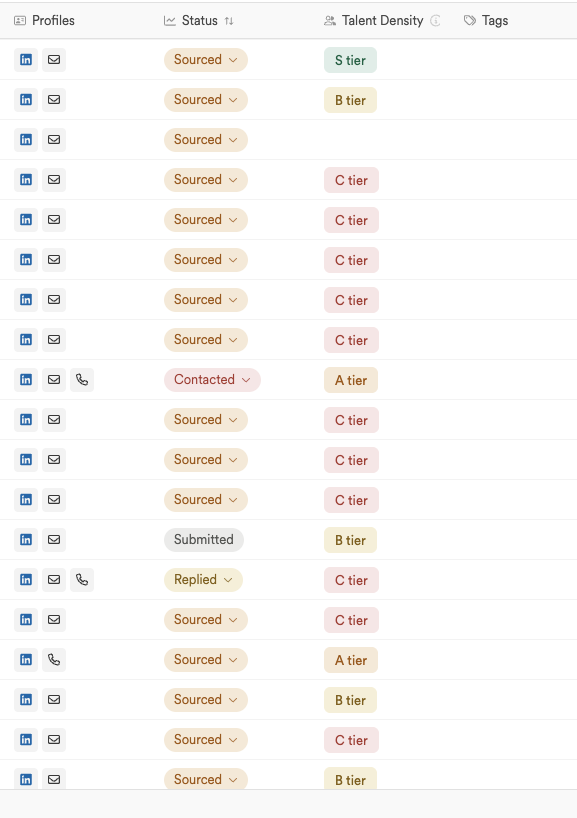
Knowing your tier is the first step because it tells you where to focus. And your tier is not fixed. Every one of the items in this guide represents a way to move your tier up.
What the resume needs to reflect is not a summary of everything you have ever done. It needs to reflect specifically why you are a strong fit for this role at this team at this company.
That means surfacing the experiences and outcomes that are most relevant to what that team is looking for — and deprioritizing everything else, even if it is impressive in a different context.
We recently worked with a candidate who was applying for an FDE role at a company that builds mortgage software for loan officers and home buyers.
The things that company cared about were clear and specific: reducing loan origination costs, accelerating the time it takes for a home buyer to secure a loan, and integrating third-party vendors including credit bureaus and title companies into a seamless workflow.
Every bullet point on that candidate's resume needed to speak to one of those things — or it needed to be deprioritized.
A resume that is impressive but not specific to what this team is solving for is a resume that gets passed over, even when the candidate is genuinely capable.
The common mistake: sending the same resume to every FDE opportunity with minor formatting changes.
The winning move: building a version of your resume for each role you are seriously pursuing that speaks directly to what that team is solving for, with accomplishments that are measurable and outcomes that are directly relevant.
Hot Tip 8: Build a YouTube Portfolio
This is the tip most candidates resist, usually for one of two reasons.
Either they do not want to put their face on camera, or they believe a company policy prevents them from doing it.
We are somewhat skeptical of the second reason — there are active Navy SEALs with public content channels — but we respect that it is a real consideration for some people.
Here is why a YouTube portfolio matters, even if it feels uncomfortable.
There are two types of candidates trying to break into forward deployed engineering right now.
Software engineers who have the technical chops but need to prove they can communicate at a business level and non-technical professionals — product managers, management consultants, customer success managers — who can communicate beautifully but need to prove they can actually build something.
In both cases, the resume alone cannot do what a video portfolio does.
Think about it from the hiring manager's perspective.
They can read a description of your skills, or they can watch you explain a complex technical concept clearly to a non-technical audience.
They can read that you have experience training teams on new tools, or they can watch a recording of you doing exactly that. Which tells them more? Which gives them more confidence?
The forward deployed engineering role is inherently visible and communicative.
You are going to be on a client site, presenting architectures to executive teams, training users who are skeptical about AI, and representing your company in rooms where relationships matter.
A hiring manager who can see how you present yourself on video before they invest time interviewing you has significantly more signal to work with than one who is relying entirely on a resume and a cover letter.
We will provide you with a list of YouTube portfolio topics specifically designed for FDE candidates in a resource linked at the end of this guide.
- The topics are not generic.
- They are calibrated to demonstrate exactly the skills that FDE hiring teams are looking for, so that your portfolio is building your case while you are not in the room.
Start. Do not wait until you feel ready. The first video is always the hardest. The tenth video is when you start getting comfortable.
The portfolio you build between now and your Palantir interview is part of your application whether you realize it or not.
The common mistake: relying entirely on a resume and interview performance to demonstrate skills that are inherently visual and communicative.
The winning move: building a YouTube portfolio that shows hiring managers exactly what they need to see before you ever walk into a room with them.
Hot Tip 9: Host Live AI Trainings, Webinars, and In-Person Events
This tip is directly connected to what Palantir actually evaluates in its FDE candidates — and it is one that most people would never think to include in an interview preparation guide.
One of the things that makes Palantir's FDE program distinct from every other forward deployed engineering operation is this: Palantir FDEs do not just build things because the client asked for them. They exercise independent judgment about what is worth building and what is not.
They push back when something would be built for the wrong reasons. And they take direct responsibility for making sure the things they build actually get adopted and used by the people they were built for.
That last part — adoption and training — is increasingly central to what the FDE role requires. You are not just delivering software. You are ensuring that the humans who need to use that software actually understand it, value it, and integrate it into their workflows.
That requires you to be an effective trainer and communicator. And it requires you to be able to produce resources — prompt guides, training materials, walkthroughs — that people can use after you leave the room.
The best way to demonstrate this capability is to actually do it. Live webinars, AI training sessions, and in-person workshops are proof of training ability in a way that a resume bullet point never can be.
New York is particularly relevant here. Thirty-five percent of all forward deployed engineering job postings in the entire country are based in New York City. San Francisco has eleven percent. If you are based in New York, the opportunity to build your training and community presence in the city where most of these jobs are is an extraordinary advantage.
You are not just preparing for the job. You are building the network, the visibility, and the demonstrated competence in the city where the hiring is happening.
If you are not based in New York, the online equivalent — hosting webinars, recording AI implementation tutorials, leading live sessions for professional communities — accomplishes the same thing in a format that travels.
Every live training session you host before your Palantir interview is a story you can tell in the interview. Every webinar you run is evidence that you can stand up in front of a room and make complex AI tools accessible to people who did not choose to study computer science. That evidence is directly relevant to what Palantir is evaluating.
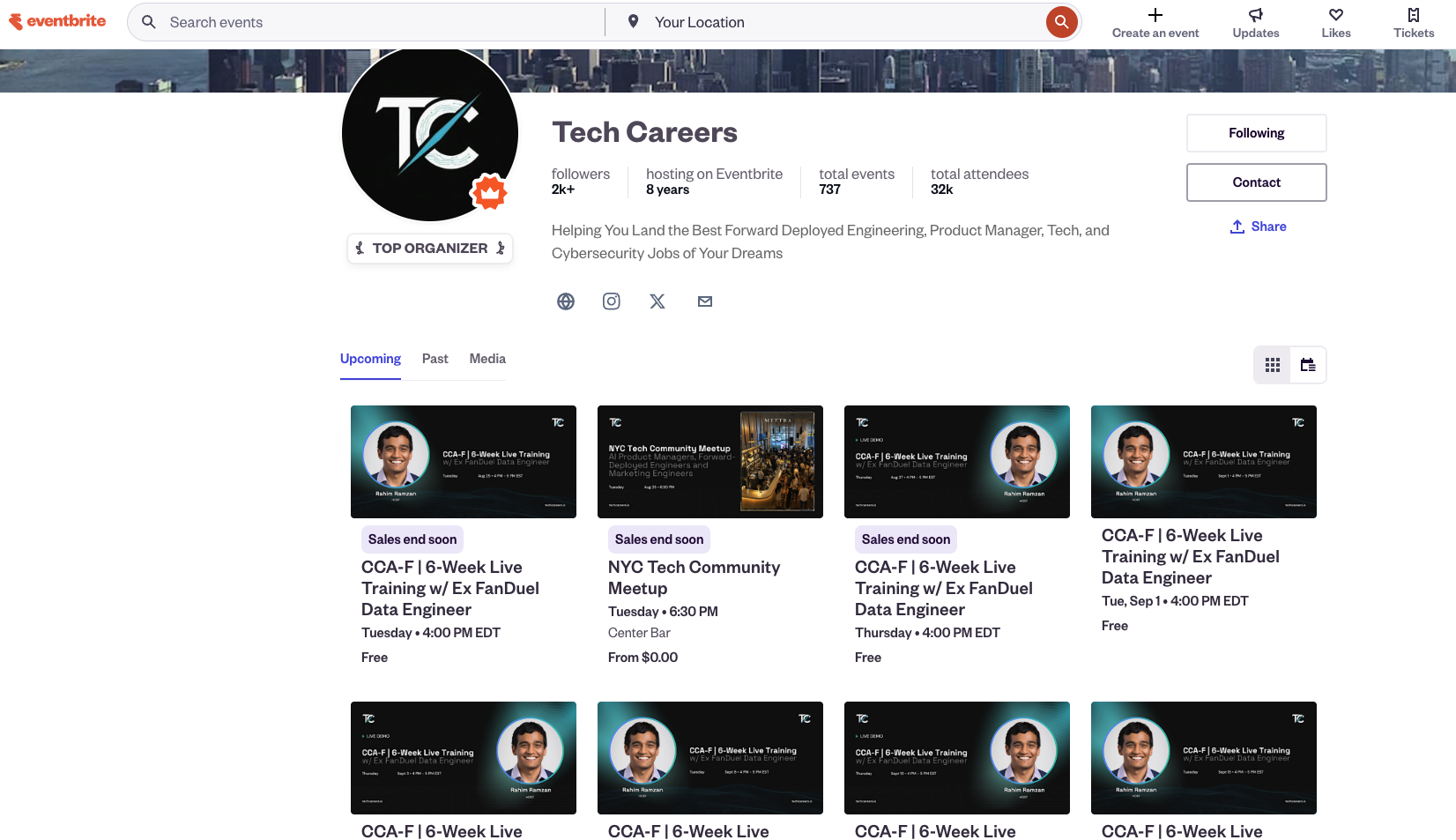
We host live AI training events across New York and other cities regularly. If you are based in New York, come to the sessions. If you are not, join the webinars. Every hour you spend in a training environment makes you a more credible candidate for a training-intensive role.
Our full events calendar is here: https://www.eventbrite.com/o/tech-careers-17438845354
The common mistake: treating interview preparation and professional development as two separate activities that happen at different times.
The winning move: running live training sessions as part of your interview preparation so that the activity and the evidence compound simultaneously.
Hot Tip 10: Network Like It Is Already Part of Your Job, Because it is.
Across all three of our programs at TechCareers.io — AI Product Management, Forward Deployed Engineering, and Marketing Engineering — more than seventy-one percent of the offers our community members have received have come from companies that initially rejected them.
Not people who were never considered. People who were rejected. And then got the offer anyway.
In almost every one of those cases, the turning point was a relationship. A networking event. A conversation at a community meetup. A connection made in person that changed how the candidate was perceived by the people making the hiring decision.
The resume that gets rejected through an applicant tracking system at nine in the morning gets an interview when the same person shakes the hiring manager's hand at seven in the evening. We have watched this happen more times than we can count.
Networking is not just a job hunting strategy for forward deployed engineers. It is a core job skill.
When you are a forward deployed engineer at Palantir or any company in the FDE ecosystem, part of your role is generating new business. You are meeting executives and decision-makers in your client's industry. You are representing your company in rooms full of people who are evaluating whether AI implementation could solve their problems.
When those people turn to you and say, "I've been hearing about forward deployed engineers everywhere recently — do you think my company needs one?" your answer to that question is part of your job description.
The best time to start developing that muscle is now, before you have the role. The networking you do in the next sixty days is simultaneously building your interview preparation and your on-the-job capability.
New York City holds thirty-five percent of all forward deployed engineering job postings in the country. If you are here, we want to see you in person. We host monthly in-person community events starting August 25th at Center Bar in Long Island City. We also host regular webinars for people who are not in New York.
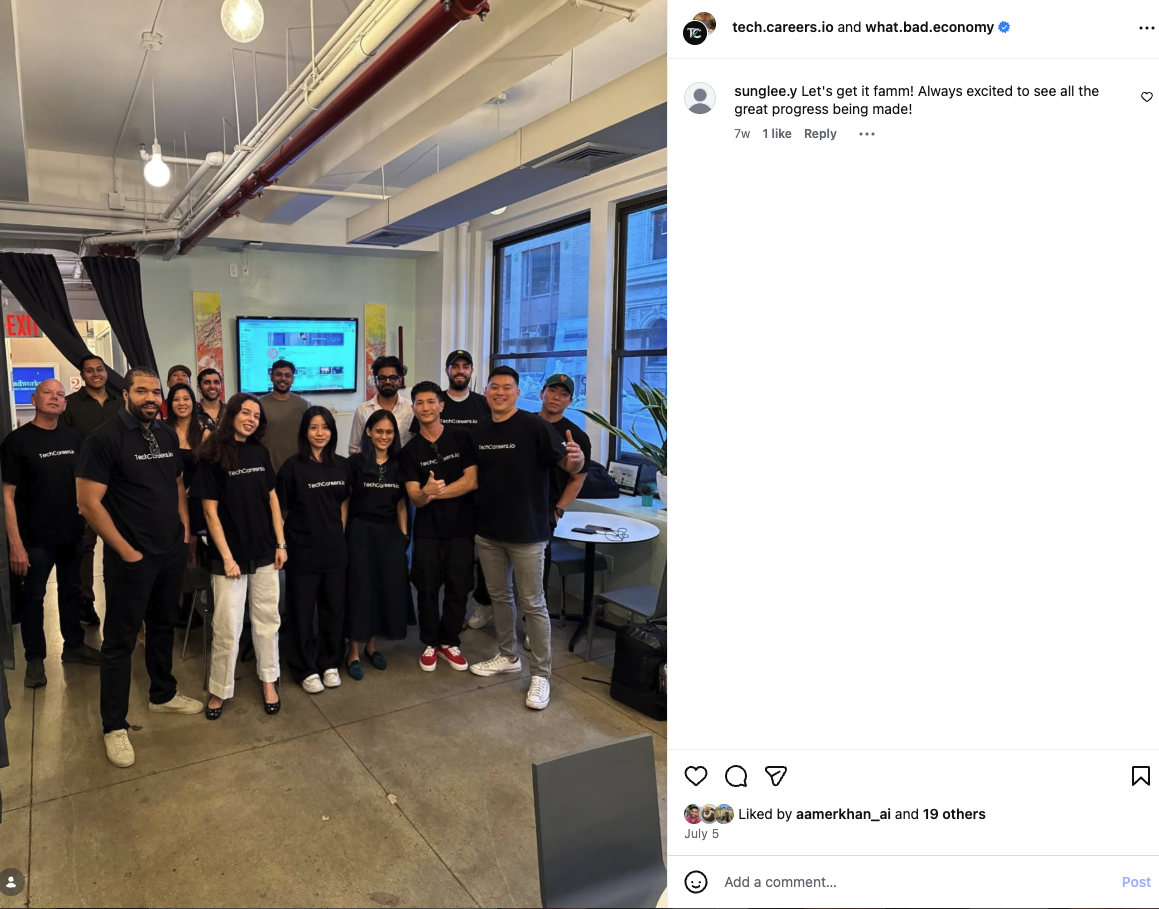
Being in a room with people who are navigating the same market, who have recently landed roles in the FDE ecosystem, and who are building the skills and credentials to compete at the highest level is not just motivating. It is intelligence. It is relationship infrastructure. It is the thing that turns a rejection into an eventual offer.
The common mistake: treating networking as something you do when you need a job, and stopping when you get one.
The winning move: building a consistent networking practice before, during, and after your job search because it is the most direct path to the opportunities that matter most in the FDE world.
Full events calendar: https://www.eventbrite.com/o/tech-careers-17438845354
Hot Tip 11: Master Marketing Engineering Skills
This is a hot tip that most people targeting forward deployed engineering roles do not see coming — and it is one of the most important things you can do to differentiate yourself.
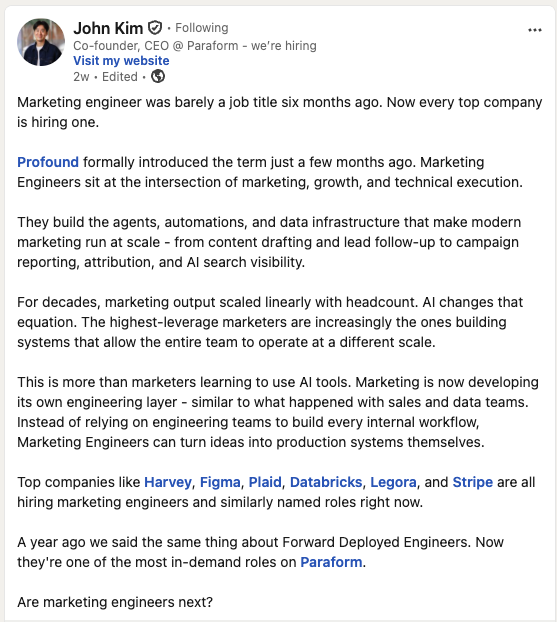
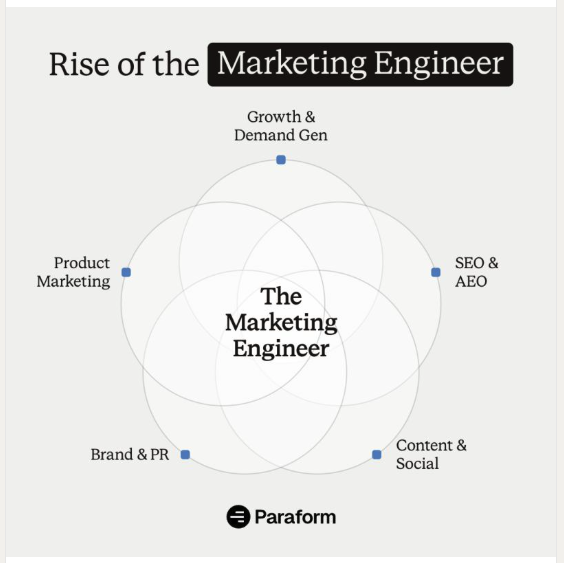
Part of your job as a forward deployed engineer is not just building for your client. It is helping your client drive revenue. Helping their customers find them. Helping them justify the investment in AI to a CFO who is asking where the return is. Understanding how distribution works, how customer acquisition works, and how to connect technical implementation to measurable business outcomes.
Forward deployed engineers who understand marketing engineering are dramatically more valuable than those who do not. Because the FDE who can say "I built this, and here is how it increased your pipeline by thirty percent" is solving a completely different problem than the FDE who can only say "I built this."
VCs and investors have been paying close attention to forward deployed engineers for exactly this reason. FDEs who understand revenue generation, customer acquisition, and distribution are the professionals most likely to become successful founders. And every major VC firm knows that FDE alumni from Palantir and similar organizations are among the most bankable founding teams they can invest in.
NVIDIA just posted seventy-six remote marketing engineering roles in a single week. The convergence of technical implementation and marketing capability is not a future trend. It is the current standard at the companies defining what the FDE role looks like in 2026.
Our marketing engineering cohort starts September 7th. Even if your primary goal is a forward deployed engineering role, the skills covered in this curriculum will make you a more complete and more competitive candidate at every company in the FDE ecosystem.
More on the cohort here: https://consultation.techcareers.io/marketing-engineer-o/survey
Hot Tip 12: Get Your Claude Certified Architect Foundations Certification
This tip is particularly important if you are coming from a non-technical background — a product manager, management consultant, or customer success professional who is targeting forward deployed engineering.
https://www.linkedin.com/feed/update/urn:li:activity:7495518068685594625/
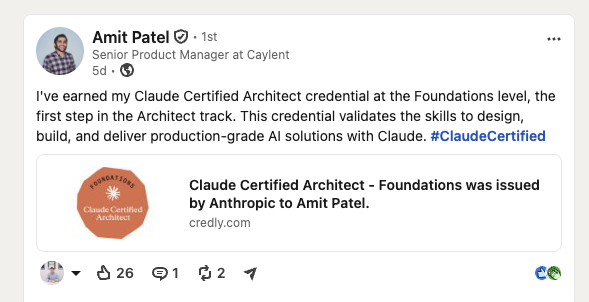
The Claude Certified Architect Foundations certification demonstrates two things simultaneously.
First, it shows that you have hands-on working knowledge of building with Claude — one of the most widely deployed AI platforms in enterprise environments right now. At companies like Salesforce, which has its own forward deployed engineering program, understanding how their clients use Claude within the Salesforce ecosystem is increasingly relevant to the FDE role. Showing that you have the certification signals that you are not just aware of these tools but have demonstrated competence with them.
Second, it signals something about your character that Palantir specifically values in FDE candidates. You set a date. You committed to a study process. You sat for an exam and passed it. You did not wait until you felt ready. You did not procrastinate.
Procrastination is not a trait that forward deployed engineering environments reward. The role requires bias for action — the ability to make a decision with incomplete information and move. Completing the CCAF exam demonstrates that you have that bias in your personal and professional development, not just in your work.
Andy Leonard, one of our program alumni who transitioned from product management to a director-level forward deployed engineering role, passed the CCAF exam in a week. His approach was directly inspired by watching James Won, our co-founder, cram for the exam, play a round of golf, and take it. The approach is not reckless. It is a demonstration of the same bias for action that hiring managers at Palantir are specifically looking for.
One more thing. The CCAF is still early enough in its adoption curve that having it is a clear differentiator. In twelve months, as more candidates earn it, it will become more of a baseline expectation. The people who have it now are differentiating themselves in a window that will not stay open indefinitely.
We run Claude Certified Architect Foundations exam preparation training twice per week, every Tuesday and Thursday at 1PM Pacific and 4PM Eastern. These sessions are open to our community and they are free. If you want the certification, the preparation infrastructure is already built and available to you.
Our full events calendar is here: https://www.eventbrite.com/o/tech-careers-17438845354
Hot Tip 13: Create a Schedule That Ties Everything Together
Everything in this guide only works if you execute it consistently. Good intentions organized by a bad schedule produce average results. A realistic schedule, followed consistently, compounds.
Here is what the schedule needs to include.
- A daily block for skill building — the technical skills if you are coming from a non-technical background, the communication and business skills if you are coming from an engineering background.
- A weekly block for portfolio work — one YouTube video, one webinar, one LinkedIn post that demonstrates what you are building and how you think.
- A weekly block for mock interview practice — minimum one session per week with a partner who will give you honest feedback, not just tell you that you did great.
- An ongoing application and networking cadence — a set number of Paraform submissions per week, a set number of networking events or webinars attended, and a set number of follow-ups sent to companies that have previously reviewed your profile.
The goal of the schedule is to make all of the activities in this guide habitual rather than sporadic. The candidate who does one great mock interview session and then does nothing for three weeks is less prepared than the candidate who does a thirty-minute mock session every week for six weeks.
Consistency is what builds the reps. The reps are what build the confidence. The confidence is what shows up in the interview.
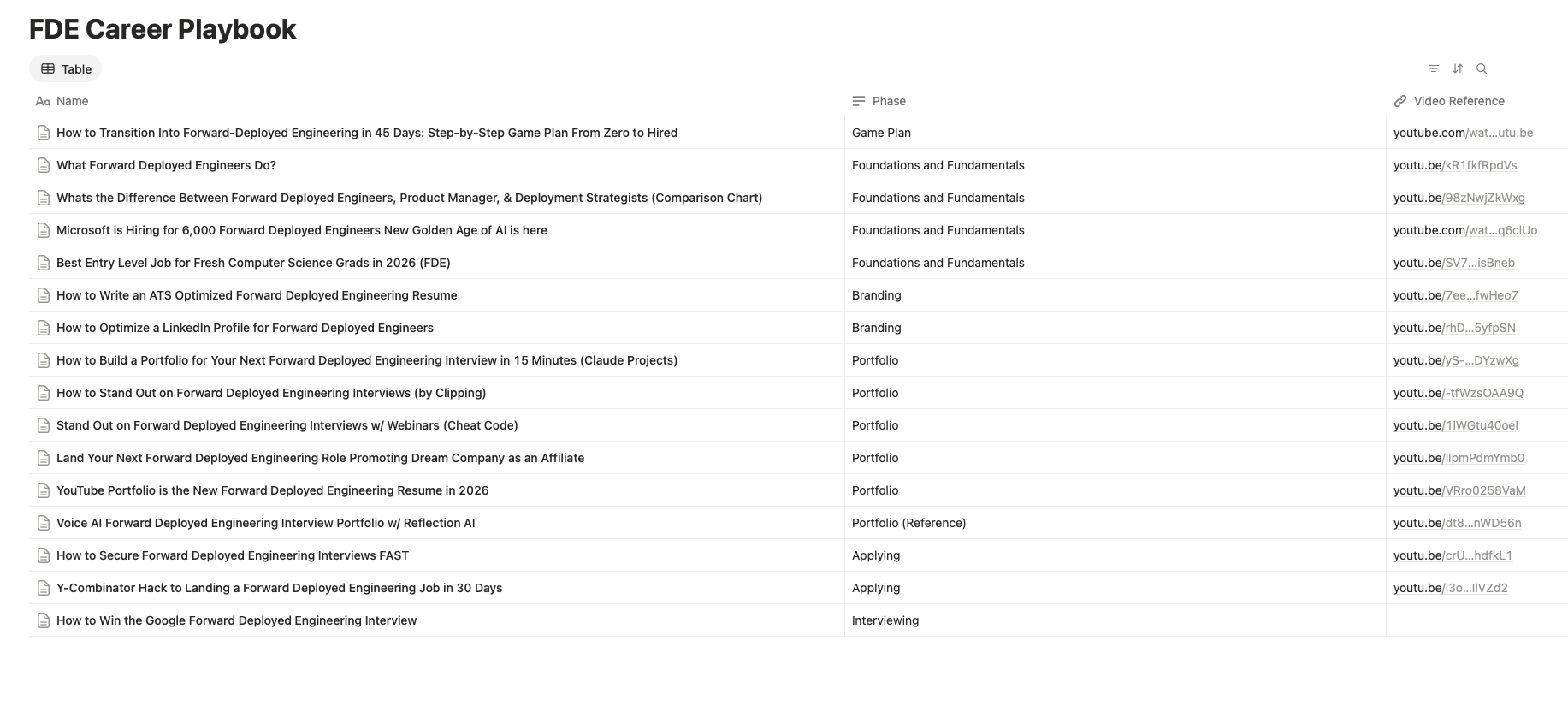
Hot Tip 14: Download the FDE Career Playbook
We have put together a free resource that extends everything covered in this guide with additional frameworks, templates, and tools specifically for FDE candidates at every stage of the transition.
Download it here: https://blush-nectarine-374.notion.site/94ab0f60997183eeb44381169fca626b?v=b92b0f60997183eeaa0088265f71eed3
Hot Tip 15: Follow Up After Every Rejection
This is the last tip. It is also the most important one. And it is the one that will determine whether everything else in this guide pays off or not.
More than seventy-one percent of the offers generated for people across our programs came from companies that initially rejected them.
That number is not an accident. It is the result of a consistent philosophy that we teach and model throughout our program: you do not take no as a final answer. You treat rejection the same way a great startup founder treats an investor passing on their pitch.
When a16z passes on a founder's series A, that founder does not disappear. They go back, address the specific concerns the investor raised, tighten the pitch, get more proof points, build more momentum, and come back with a stronger case. They also build relationships with smaller investors who give them validation and credibility to bring back to the bigger conversation.
The same approach works in the FDE job market.
If a company rejects your application or your interview does not lead to an offer, that is information. It is not a verdict. What specifically were they looking for that your background did not demonstrate clearly enough? What story did you not tell that you should have? What metric did you not have that would have made the case stronger?
Address those things. Come back. Follow up.
The companies that rejected you are also the companies that now have your information on file. They know who you are. They have already invested some time reviewing your background. When you come back six weeks later with a stronger portfolio, a new certification, and a cleaner story that addresses exactly what they flagged last time, you are not starting from scratch. You are picking up a conversation that is already partially open.
Forward deployed engineers do not quit. Future unicorn startup founders do not quit. The Palantir FDE Mafia was built by people who kept pushing through rejection after rejection and kept getting better after every one.
That is the mentality. Build it now, before you have the role. Because you are going to need it on the job too.
The common mistake: treating a rejection as the end of the conversation.
The winning move: treating every rejection as the beginning of the next application and following up consistently until the right door opens.
Start Thinking Like a Palantir FDE Right Now
You have read this entire guide. You might be feeling one of two things at this point.
You might be feeling motivated and slightly overwhelmed at how much work this involves. That feeling is appropriate. Getting into Palantir for a forward deployed engineering role is not easy. But the bar is not unreachable, and every item on this list is completely within your control. The work compounds. What feels like a lot today becomes a rhythm in thirty days and a system in sixty.
You might also be feeling the specific weight of imposter syndrome — that voice that says this is a great guide but it is for other people, more qualified people, people who already have more of this figured out than you do. That voice is almost always wrong about the magnitude of the gap. It is not wrong that a gap exists. Every candidate has gaps. The question is what you do about them.
Here is what you can do right now, today, without waiting.
- Watch the Shyam Sankar and Joe Lonsdale podcast. It is free and it is the single most important hour of FDE preparation content that exists anywhere.
- Submit your profile through the Paraform link below to get your candidacy assessed. We will tell you honestly whether you are an S-tier, A-tier, B-tier, or C-tier candidate right now, and what the path looks like to get where you need to be. This costs you nothing.
- Schedule a consultation with our team about our upcoming forward deployed engineering cohort. If you are in New York, we want to meet you in person.
- Attend our next live event or webinar and start building the community and network that will matter as much as your technical preparation in the final outcome.
- Download the FDE Career Playbook and start with whatever section is most relevant to where you are right now.
You do not need a perfect plan to start. You need a first step. Pick one of the above and take it today.
As Bill Ackman says: just focus on getting a little bit better every single day. Effort compounds just like money.
Before you know it, you are a forward deployed engineer at Palantir — or at one of the dozens of companies that Palantir alumni have built and are running, which are all extensions of the same ecosystem anyway.
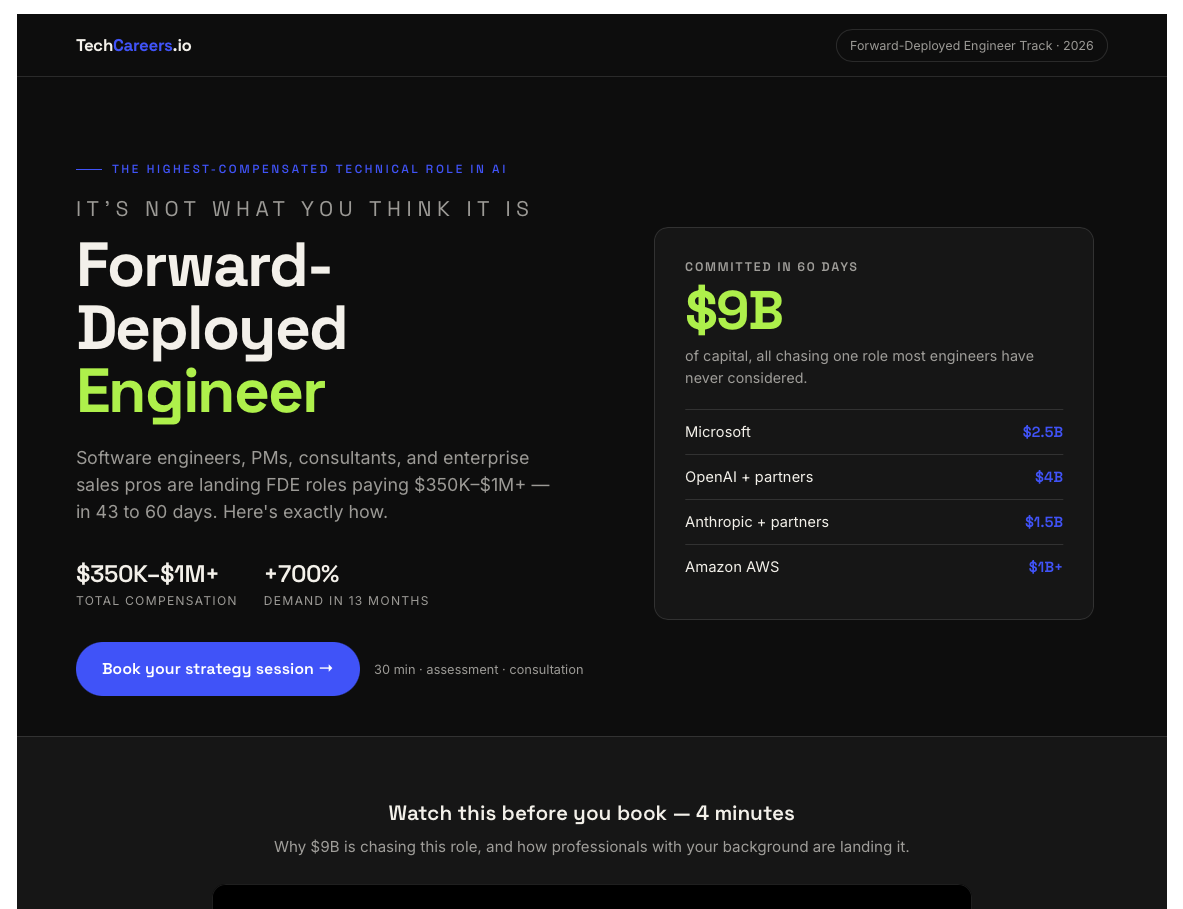
Schedule Your Forward Deployed Engineering Strategy Session
If you want to talk about your specific background and how we can help you navigate this process, our team is ready to have that conversation.
We are approved recruiters on the Paraform platform with direct access to hiring managers, real rejection feedback, and the ability to get you submitted to Palantir alumni-founded companies for practice interviews before the real one. We run mock interview sessions. We build customized interview cheat sheets. We have an in-person presence in New York City where thirty-five percent of all FDE jobs are located.
You can do this alone. A lot of people try. We are telling you that the candidates who move through this process with access to the right intelligence, the right coaching, and the right practice infrastructure get there faster and with a higher offer rate.
Book your session here: https://consultation.techcareers.io/o-discover-fde/about
Submit your profile for Paraform consideration here: https://www.paraform.com/forms/cms9ccu9n00070bjur3ljopm2

Frequently Asked Questions
What is the Palantir forward deployed engineer interview process?
The Palantir forward deployed engineer interview spans four to five stages conducted over three to six weeks. The process begins with a recruiter screen covering your background and motivation for a customer-facing engineering role. This is followed by a hiring manager screen, one or more technical deep-dive rounds, and the decomposition case study — the round that carries the most weight and has the lowest pass rate. Behavioral questions are woven throughout every stage rather than isolated in a single round. The process is specifically designed to evaluate whether a candidate can break down a vague, real-world problem into parts they can actually build — a skill that most standard software engineering interview loops never test.
What does Palantir look for in a forward deployed engineer?
Palantir evaluates forward deployed engineer candidates across three dimensions simultaneously. Technical ability — the candidate needs to be able to build real things in a client environment, not just design them. Communication ability — the candidate needs to be able to translate complex technical concepts for non-technical stakeholders without creating liability for the company. And culture fit — the candidate needs to genuinely embody the Palantir FDE philosophy of moving fast, exercising independent judgment about what is worth building, and taking ownership of client outcomes rather than just task completion. Candidates who focus exclusively on technical preparation routinely fail the communication and culture dimensions.
How hard is the Palantir FDE interview?
The Palantir FDE interview is considered one of the most rigorous interview processes in technology. On Glassdoor, candidates rate the difficulty 3.26 out of 5 and only 46.4 percent describe it as a positive experience. The decomposition case study — where candidates must break down an ambiguous real-world challenge under time pressure — is the most commonly failed round. The interview is particularly difficult for candidates who have only prepared using publicly available resources because the most valuable preparation intelligence comes from direct recruiter access to hiring managers and real rejection feedback from previous candidates.
What is the Palantir decomposition case study?
The decomposition case study is a round unique to Palantir's FDE interview process that has no direct equivalent at most other technology companies. The candidate is given a vague, real-world business or technical challenge and asked to break it down into parts they can actually build. The round is not testing whether the candidate arrives at the right answer. It is testing whether the candidate asks the right clarifying questions, structures their thinking clearly under ambiguity, and communicates their reasoning in a way that a non-technical stakeholder could follow. Most candidates fail this round by jumping to solutions before fully clarifying the problem.
What is a forward deployed software engineer at Palantir?
Palantir uses the title Forward Deployed Software Engineer, or FDSE, for its engineering track equivalent of the forward deployed engineer role. An FDSE embeds directly inside a client organization, understands the client's business problems at a deep level, builds and deploys software solutions in the client's environment, and trains the client's team to use what was built. The role requires strong technical ability, excellent client-facing communication, the business judgment to identify which problems are worth solving, and the ability to represent Palantir credibly in high-stakes executive conversations.
How long does the Palantir FDE interview process take?
The Palantir forward deployed engineer interview process typically takes three to six weeks from the initial recruiter screen to a final decision. The number of rounds and the specific structure of the process can vary depending on the team you are interviewing with and the specific role requirements. Candidates should expect at minimum four stages and should plan their preparation timeline accordingly.
What is the salary for a Palantir forward deployed engineer in 2026?
Forward deployed engineer compensation at Palantir and across the FDE ecosystem ranges from approximately $173,000 at the entry level to over $630,000 at the staff level in total compensation including equity. Mid-level FDE roles at frontier AI companies typically cluster in the $300,000 to $550,000 total compensation range. Principal-level roles at frontier labs can exceed $1,000,000 in total compensation. Palantir specifically offers competitive equity packages that can significantly increase total compensation beyond base salary.
Do I need a computer science degree to become a forward deployed engineer at Palantir?
Palantir does not strictly require a computer science degree for forward deployed engineering roles, though many candidates in the pipeline do have technical educational backgrounds. What Palantir evaluates is whether a candidate can actually do the work — build in a client environment, communicate technical concepts to non-technical stakeholders, and exercise sound business judgment. Candidates from product management, management consulting, customer success, and other non-traditional technical backgrounds have successfully broken into FDE roles at Palantir and across the FDE ecosystem when they can demonstrate the combination of technical capability and communication skills the role requires. Domain expertise relevant to the specific team's client base is often more valuable than a specific degree.
What is the Shyam Sankar podcast and why does it matter for FDE interview prep?
Shyam Sankar is the CTO of Palantir and the person who invented the forward deployed engineering role. He coined the title, built the original FDE program at Palantir, and his vision for what an FDE should be and do has shaped every forward deployed engineering department at every company in the FDE ecosystem. A podcast interview between Shyam Sankar and Palantir co-founder Joe Lonsdale covers the origin of the role, the training the first FDEs underwent, how the role has evolved from 2010 to 2026, what Palantir specifically looks for in FDE candidates, and the culture that defines the FDE function. This is the most important single piece of preparation content available for anyone targeting a Palantir FDE role and most candidates have never seen it.
What is the Palantir FDE Mafia?
The Palantir FDE Mafia refers informally to the network of forward deployed engineering leaders across the technology industry who built their careers at Palantir and have gone on to found or lead FDE functions at other companies. Virtually every forward deployed engineering department being built right now outside of Palantir is being led by someone who came out of the Palantir FDE program. This network is the most connected professional ecosystem in the FDE space and many of the companies in it recruit through the same platforms and share similar interview philosophies and cultural expectations.
What is the Claude Certified Architect Foundations certification and why does it matter for FDE candidates?
The Claude Certified Architect Foundations certification, often referred to as the CCAF, is a credential that demonstrates hands-on working knowledge of building with Claude — Anthropic's AI platform. For forward deployed engineer candidates, particularly those coming from non-technical backgrounds, the CCAF demonstrates two things simultaneously. First, it shows technical credibility with one of the most widely deployed AI platforms in enterprise environments. Second, it signals bias for action — the ability to set a date, commit to a process, and execute. Both of these qualities are specifically valued in FDE candidates at Palantir and across the FDE ecosystem. TechCareers.io hosts CCAF exam preparation training every Tuesday and Thursday at 1PM Pacific and 4PM Eastern.