
What Is a Forward-Deployed Engineer — And Why Is This the Most Coveted Role in AI Right Now?
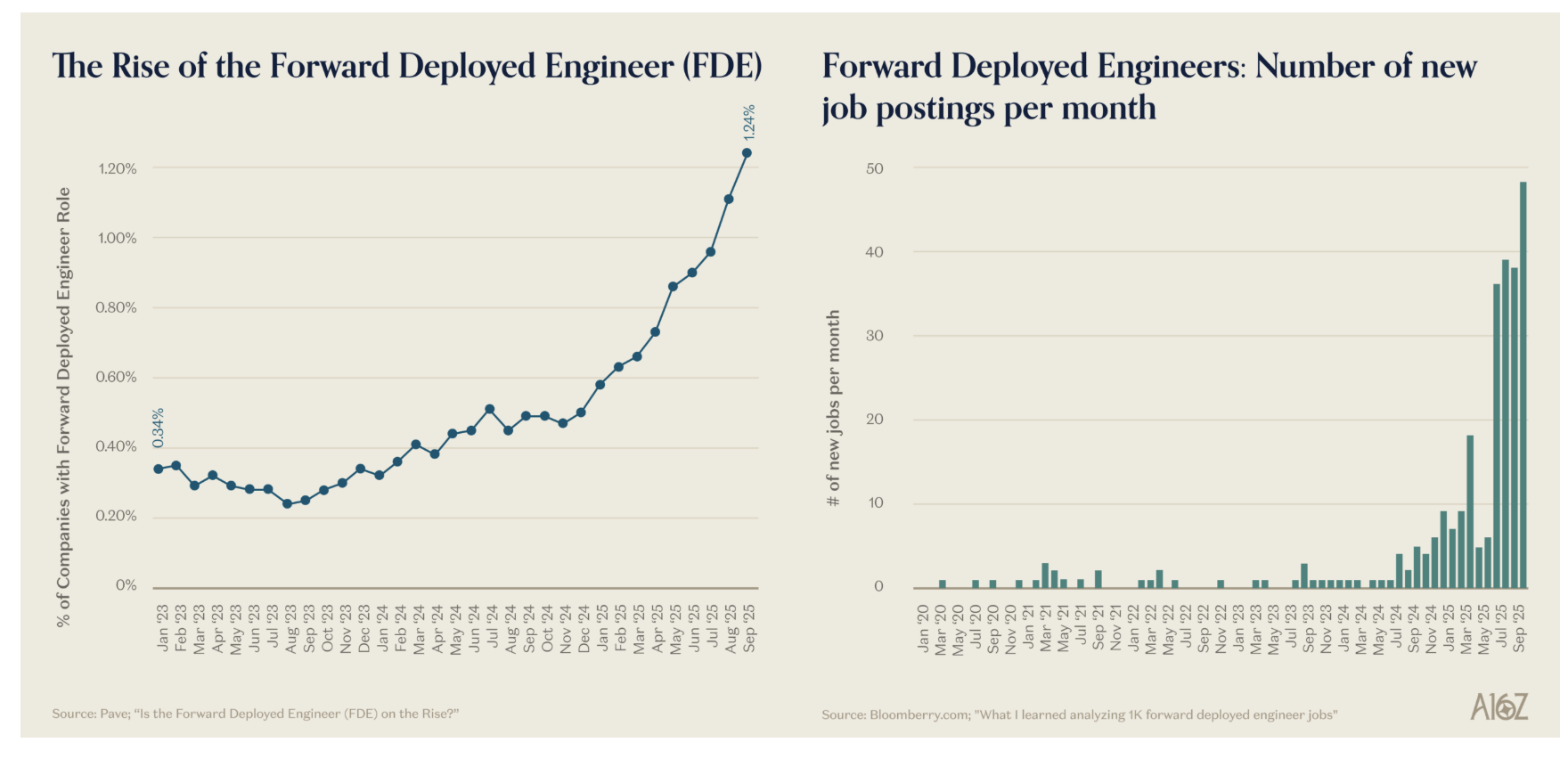
A forward-deployed engineer at an elite AI firm earns a base salary between $250,000 and $350,000 — with total on-target earnings that can exceed $1,000,000 annually. And the number of companies hiring for this role has grown by more than 5,000% in recent years. (Source: Tech Careers internal program data and market observation, 2024–2025.)
If you've never heard of this role before, that's not an accident. It was invented by Palantir in the early 2010s, built quietly inside one of the most secretive companies in enterprise tech, and only recently escaped into the broader AI ecosystem — precisely when the market needed it most.
Today, every serious AI-native company — Anthropic, OpenAI, Databricks, ElevenLabs, Perplexity — is racing to hire forward-deployed engineers. The demand is enormous. The supply of truly qualified candidates is not. That supply-demand imbalance is, for the right person reading this, one of the largest career opportunities in a generation.
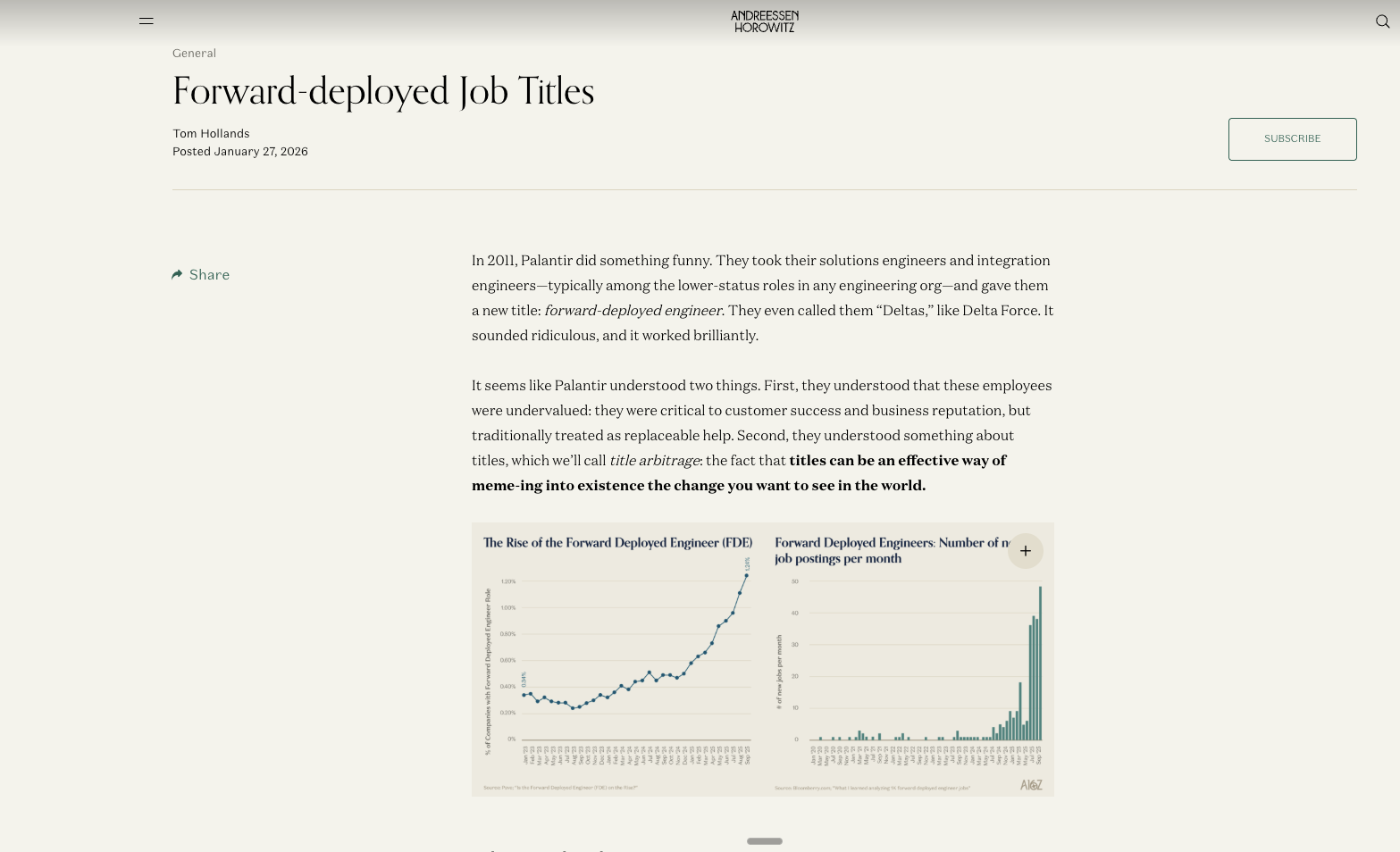
Here is an article from A16Z that illustrates how strong the demand is for forward-deployed engineers.
https://a16z.com/forward-deployed-job-titles/
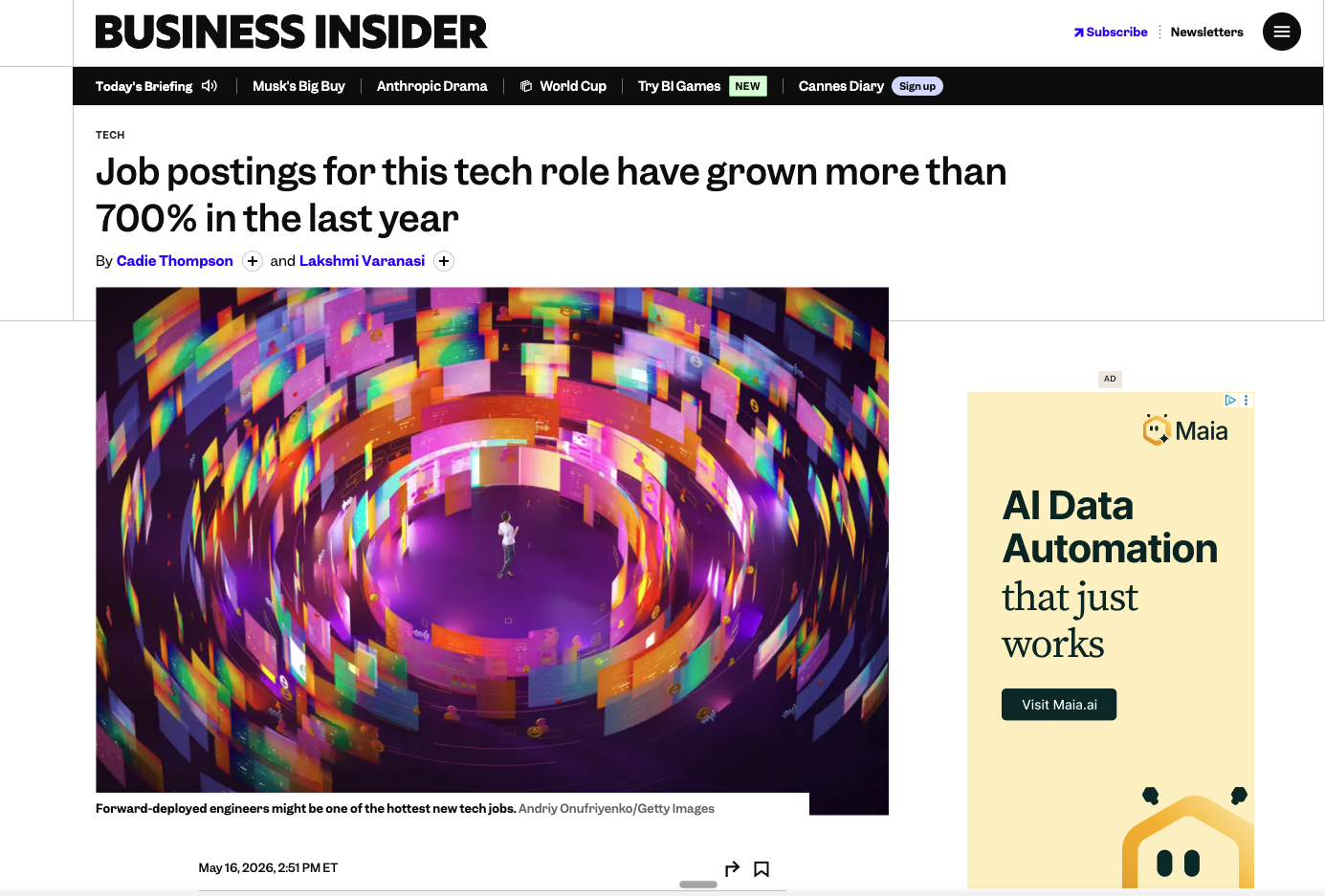
According to a recent article from Business Insider, the number of job postings for forward-deployed engineers has grown more than 700% in just the past year.
https://www.businessinsider.com/forward-deployed-engineer-jobs-in-demand-2026-5
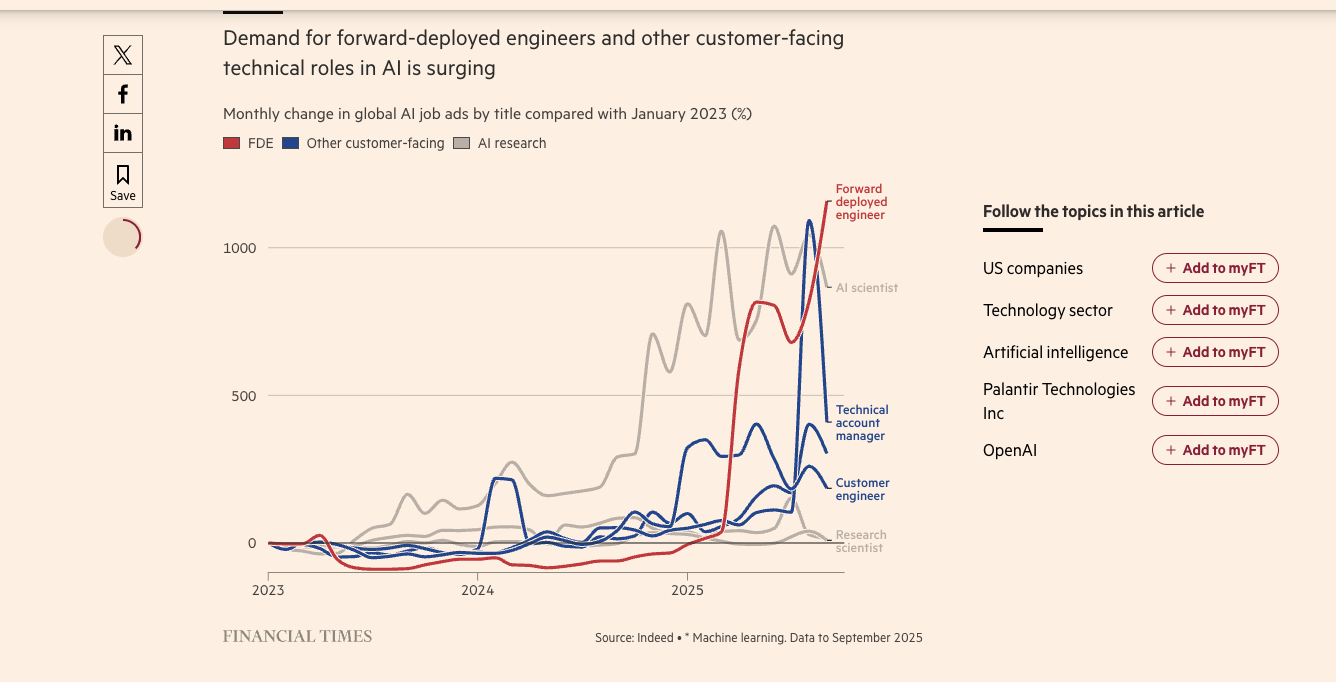
Here is an older article released by the Financial Times back in 2025, which highlights how the role really gained popularity in 2025.
https://www.ft.com/content/91002071-7874-4cb7-9245-08ca0571c408?syn-25a6b1a6=1
What Is a Forward-Deployed Engineer?
A forward-deployed engineer (FDE) is a senior technical professional who embeds directly within a client's organization to ensure the successful adoption, integration, and expansion of a software or AI product. Unlike a solutions engineer — who solves a discrete technical problem and exits — an FDE trains client teams to become power users, identifies new revenue opportunities for both the client and their employer, and operates with the autonomy of a founder within each engagement. The role was pioneered by Palantir Technologies in the early 2010s and has since become the defining go-to-customer role of the AI era.
The question isn't whether this role is real or sustainable. The question is whether you are the right candidate — and whether you move fast enough to claim one of these positions before the window narrows. Let's start with what you'd actually be doing every day.
What Does a Forward-Deployed Engineer Actually Do Every Day?
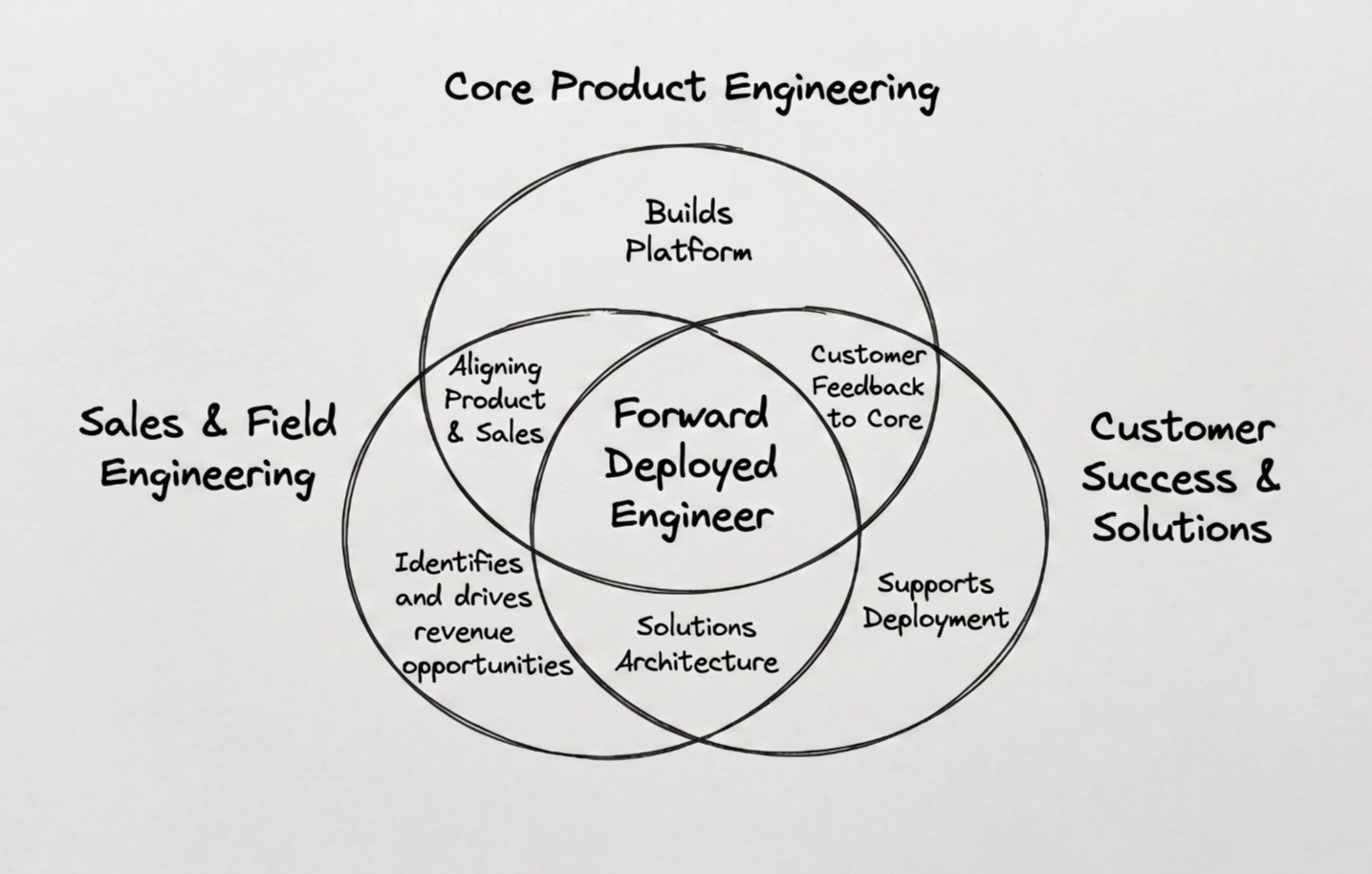
A forward-deployed engineer spends the majority of their working hours embedded at a client site, acting simultaneously as a trainer, a technical architect, a revenue strategist, and an executive communicator.
There are three core responsibilities that define the FDE role across virtually every company that hires for it:
- Enable the client's team to become power users of the product or AI solution your company has sold them. This is the primary function. You are not there to build something for them and leave. You are there to make their people capable of building and extending the solution themselves — faster than they could without you.
- Identify monetization opportunities for the client. You develop a deep understanding of the client's business model, customer base, and competitive position. You surface ways they can generate additional revenue or reduce cost by leveraging your product more aggressively. This requires genuine business acumen — not just technical fluency.
- Identify additional revenue opportunities for your employer. You are, in part, a field extension of your company's commercial team. When you identify expansion opportunities — new use cases, adjacent departments, upsell potential — you surface them. This is the revenue identification function that justifies FDE compensation at the level it commands.
How FDE Differs From Solutions Engineering
This is the most important distinction to understand clearly, because confusing the two leads most candidates to undervalue what they're actually capable of.
A solutions engineer arrives on a client site, identifies a technical problem, resolves it, and moves on. Their job is reactive. They are, as the source material from Palantir's own alumni network puts it, a "glorified troubleshooter."
A forward-deployed engineer does everything a solutions engineer does — and then builds the organizational capability to prevent the problem from recurring. They train the team. They surface the upsell. They leave the client's internal team measurably more capable than when they arrived.
A concrete scenario: Consider an FDE deployed at a hedge fund that has purchased an Anthropic enterprise contract.
A solutions engineer would scope their API integration requirements, build the integration, deliver it, and close the ticket. An FDE would spend the first two weeks conducting technical discovery interviews with portfolio managers, risk analysts, and the CTO.
They would identify that the real strategic need isn't a static dashboard — it's a real-time decision support layer that the internal quant team wants to own and extend themselves.
The FDE then trains that quant team on LLM orchestration patterns, helps them build and iterate on their first prototype, and — three months later — that team is self-sufficient and expanding the Anthropic footprint from one department to four.
The FDE's employer just secured a contract renewal worth five times the initial value. That's the FDE difference.
The Travel Component
Forward-deployed engineering requires travel — especially in the initial phases of each client engagement. This is non-negotiable for most roles. If you're among the majority of tech workers who resisted return-to-office mandates, this is worth honest reflection.
That said, the travel component is precisely one of the reasons this role pays what it pays. Most software engineers won't do it. The ones who will have a structural compensation advantage. Frame it not as a burden but as leverage.
How Much Do Forward-Deployed Engineers Make? The Real Numbers.
Forward-deployed engineers earn significantly more than their peers in traditional software engineering roles, and the gap is not marginal.
| Role | Base Salary Range | OTE / Total Comp |
|---|---|---|
| Junior SWE | $90,000 – $150,000 | Minimal variable |
| Senior SWE | $180,000 – $280,000 | Limited variable |
| Solutions Engineer | $160,000 – $240,000 | Some variable |
| Forward-Deployed Engineer | $250,000 – $350,000 | Up to $1,000,000+ |
These numbers are not theoretical. They reflect active market compensation at firms including Palantir, OpenAI, Anthropic, and Databricks, as observed through placements and market intelligence gathered over multiple years of FDE-specific recruiting and coaching. (Source: Tech Careers program data, 2024–2025.)
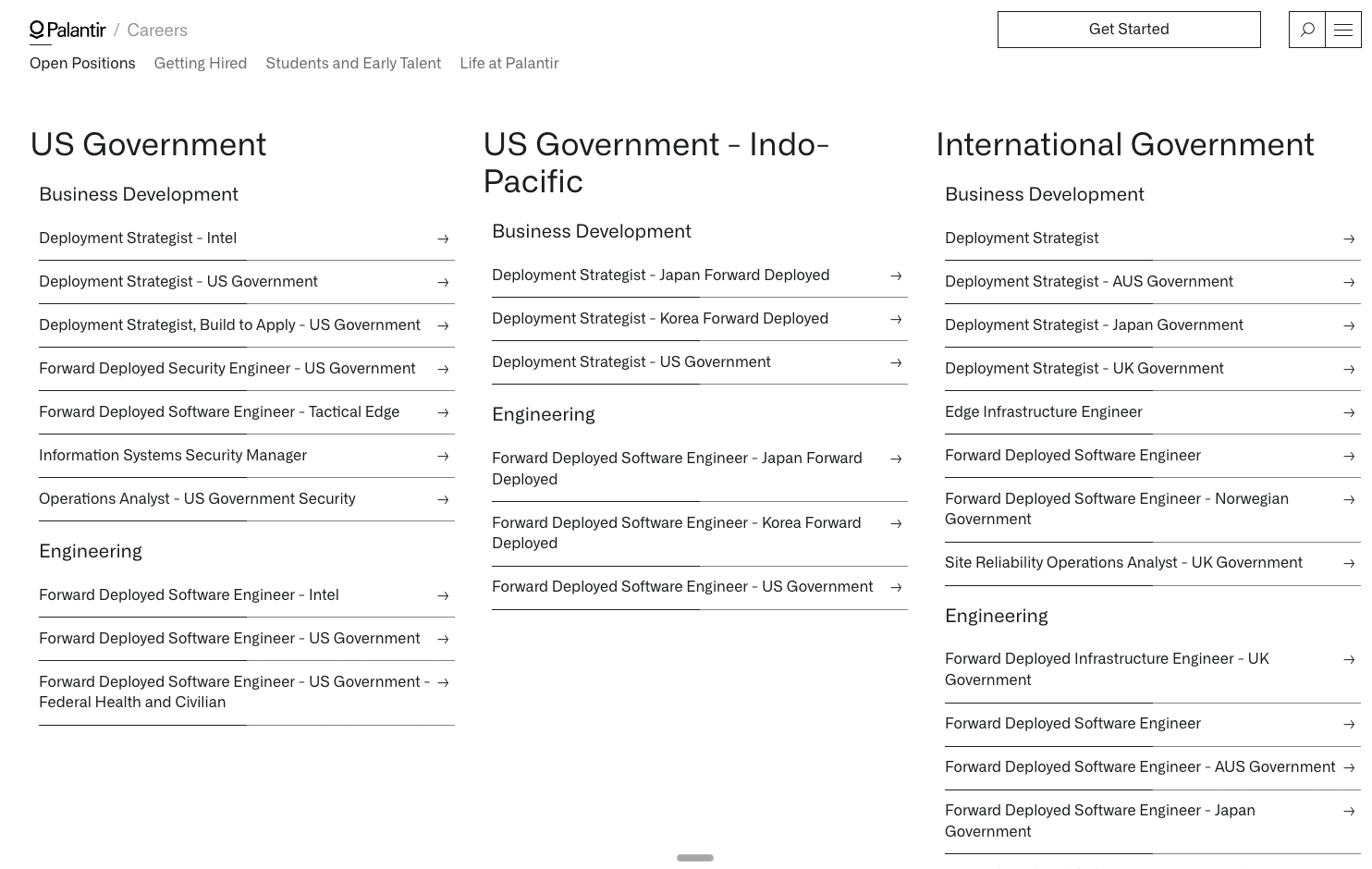
Here is a link and a screenshot to the Palantir career page.
https://www.palantir.com/careers/open-positions/
As you can see, there are various specializations for the forward-deployed engineering role, including Deployed Strategists, Forward Deployed AI Engineer, and beyond.
It's also important to note that if you have any proficiency with a foreign language, your earning potential can potentially be extremely lucrative.
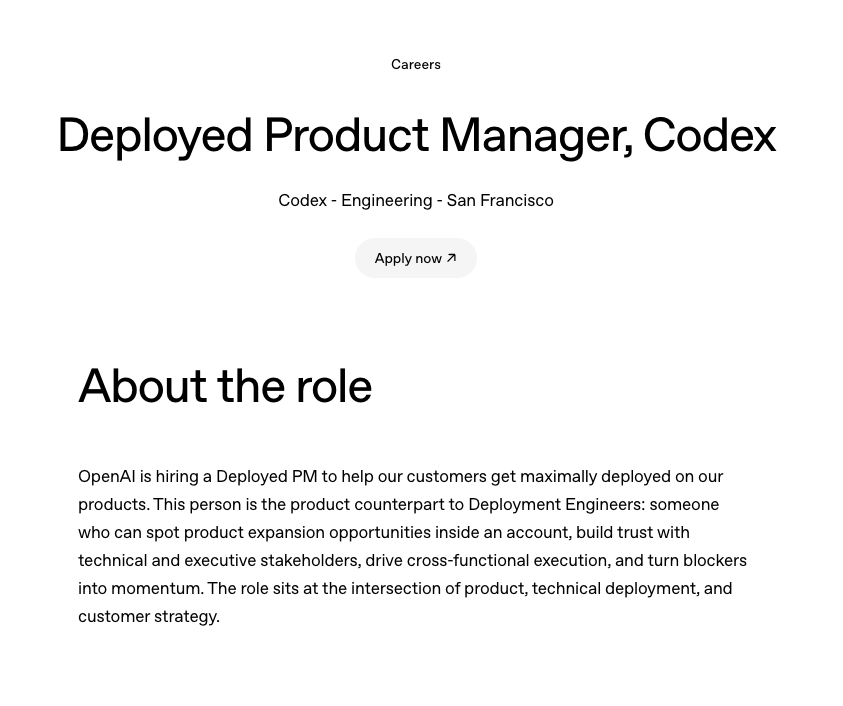
Here is a link to the deployed product manager position with OpenAI. As you can see from the job description, the role has a lot of overlap with deployment engineers that work alongside them.
https://openai.com/careers/deployed-product-manager-codex-san-francisco/

Why Does This Role Pay So Much More?
There are four distinct reasons — each one multiplying the total compensation premium:
1. Customer-facing technical fluency is exceptionally rare. Most engineers are technically proficient. A much smaller subset can walk into a boardroom, decompose a complex system architecture in plain language, manage a non-technical executive's concerns in real time, and identify an upsell opportunity in the same conversation. That combination commands a premium because it's genuinely scarce.
2. Entrepreneurial revenue identification is a skill, not a trait. The ability to look at a client's business and surface a monetizable opportunity — for them and for your employer — is not something most engineers have ever been asked to do. FDEs are paid partly as field salespeople. The variable compensation component reflects quota attainment on expansion revenue. The engineers who can do this well earn at the upper bound.
3. Travel and deployment willingness. The majority of the tech workforce opted out of on-site work. FDEs opt back in — deliberately, strategically, and at premium rates. The supply of qualified candidates who will travel is structurally constrained, which keeps compensation elevated.
4. AI proficiency at the deployment level. There is a significant difference between an engineer who uses AI tools and an engineer who can deploy AI solutions inside a client's legacy enterprise environment, train the client's team on those solutions, and identify where the next AI integration opportunity lives in their business. The latter profile is rare. The market prices rarity.
If you're already technical and this is the first time you've seen your career potential laid out this clearly — that's exactly who this call is designed for.
📅 Schedule Your FDE Career Strategy Session →
This is a mutual qualification conversation. We don't accept everyone, and we won't waste your time if the fit isn't there.
The Exact Skills Elite AI Labs Are Hiring For in Forward-Deployed Engineers
Non-Negotiable Technical Baseline
Elite AI firms do not provide on-ramps for non-technical candidates in FDE roles. The technical foundation must already exist before any conversation about an FDE transition begins. Specifically, companies expect proficiency in:
- Python and/or TypeScript — not at a beginner level, but at a production-deployment level. You should be comfortable with APIs, async patterns, and integration work.
- System design fundamentals — the ability to decompose a client's existing infrastructure, identify integration points, and propose architecture options with clear trade-off analysis.
- LLM orchestration — building and deploying pipelines that use large language model APIs (Claude, GPT-4, Llama variants) within enterprise constraints, including legacy firewall environments.
- Agentic AI — designing and deploying autonomous agents that perform multi-step tasks, interact with external APIs, and operate within production-grade reliability requirements.
- Custom dashboard development — using tools like Claude Code or Cursor to build real-time KPI dashboards for client teams. This is a high-frequency FDE deliverable that clients value enormously.
- Voice AI familiarity — platforms including ElevenLabs, VAPI, and Sierra are active in enterprise deployments. FDEs who can design and deploy voice AI agents have a significant hiring advantage.
- Cybersecurity fundamentals — understanding of enterprise security constraints, data governance requirements, and how they affect AI deployment decisions.
What Separates the $500K Candidate from the $150K Candidate
- Technical discovery interviewing — a structured methodology for entering a client engagement and extracting the real business problem beneath the stated technical request. This is a learnable framework, and it is the single most impactful skill an FDE can possess.
- System decomposition communication — the ability to present a complex technical architecture to a non-technical executive audience in a way that maps directly to their business priorities: time to value, cost reduction, and revenue projection. Not a technical brief. A business case.
- Managing non-technical stakeholders under ambiguity — clients change their minds. Priorities shift. The stated vision rarely matches the actual need. FDEs who can navigate this without losing the relationship — or the contract — are the ones who get re-deployed, re-requested, and promoted.
- Upsell and expansion revenue identification — the entrepreneurial muscle of spotting an adjacent use case, framing it in ROI terms, and surfacing it to the right executive at the right moment. This is trainable. It is not optional for FDEs who want to earn at the top of the range.
- Impactful client-side training delivery — the ability to run a training session with a team of non-technical professionals that leaves them genuinely empowered, not just informed. The FDEs who receive the highest client satisfaction scores — and who get re-requested most frequently — are the ones who make clients feel capable and inspired, not dependent.
The Top Certification for FDE Candidates in 2026
The Anthropic Claude Certified Architect Foundation exam is currently the highest-signal certification available for FDE candidates. It is a 120-minute, 60-question exam built entirely around trade-off analysis — precisely the cognitive skill FDEs deploy on client sites every day.
Unlike most technical certifications that test memorization, the Claude architect exam presents scenarios where all four answer options can be simultaneously correct and incorrect depending on the trade-offs being measured. It tests your ability to reason under constraint — the defining cognitive requirement of FDE work.
Acquiring this certification in 2026 places you in a small, identifiable pool of candidates who have demonstrated architecture-level AI reasoning. Hiring teams at AI-native companies notice.
Is Forward-Deployed Engineering Right for You? The Honest Filter.
Forward-deployed engineering is the right transition for a specific profile of professional. It is not the right transition for everyone, and the program exists precisely to make that determination before you invest time, capital, or momentum in the wrong direction.
Profile 1: The Senior Software Engineer
You have the technical depth. The gap is typically the customer-facing layer — comfort in front of non-technical executives, the ability to identify business value in a technical system, and the confidence to train a room full of skeptical professionals who don't share your background. All of these are trainable. None of them require starting over technically.
Profile 2: The Solutions Architect
You already operate at the intersection of technical systems and business requirements. You have the system design vocabulary. The gap is usually in proactive revenue identification and the entrepreneurial posture FDE requires — shifting from reactive problem-solver to forward-deployed strategic partner. This is a posture shift, not a skill rebuild.
Profile 3: The Technical Consultant or Systems Integrator
You have client-facing experience and project delivery discipline. The gap is typically AI fluency — specifically at the deployment and integration level, not just conceptual familiarity. Building that technical depth in a focused 90-day program is achievable.
Profile 4: The Technical Product Manager
You have the business acumen, the stakeholder management experience, and the prioritization discipline. The FDE trajectory for TechPMs often runs through forward-deployed product management roles — an increasingly common variant that companies like OpenAI have actively built out. The gap is usually hands-on technical depth in AI deployment scenarios.
The Age Question
You are never too old to transition into a forward-deployed engineering role. The market does not care about your graduation year.
It cares about your AI proficiency, your communication capability, and your willingness to deploy.
Many of the most successful FDE transitions in the program have come from professionals in their late 30s and 40s — individuals whose career experience gives them a credibility and maturity advantage in client-facing situations that early-career engineers simply cannot replicate.
What's more important than your age is the value that you're bringing with you as an addition to the team.
Imposter Syndrome
Imposter syndrome is totally normal and understandable.
You may be looking at this role and thinking to yourself that you don't stand a chance in making this transition, but the best way to find out is by scheduling a career strategy session with one of the members of our admissions team.
We don't accept everyone into the program. This call is a mutual qualification.
📅 Apply for Your FDE Career Strategy Session →
In 45 minutes, you'll leave with a clear picture of where you stand, what the realistic timeline looks like, and whether this program is the right vehicle for your transition.
What Comes After Forward-Deployed Engineering? The Career Paths Are Exceptional.
Forward-deployed engineering is not a terminal position. It is one of the most powerful career launchpads in the technology sector, precisely because of the breadth of capability it builds — technical depth, commercial acumen, client relationship leverage, and organizational leadership.
The four most common trajectories after a successful FDE career:
Path 1: Build or Lead FDE Teams at AI-Native Companies
The most direct next step. You've spent years deploying at client sites, building the organizational playbook for FDE work, and developing the judgment that comes from managing complex engagements. That judgment is exactly what AI-native companies need when they're building their own FDE functions from scratch.
Path 2: Launch Your Own AI Consulting or Training Agency
After two to four years as an FDE, you will have developed a significant book of relationships, a reputation for delivery, and a portfolio of client success across industries. The infrastructure to launch an independent AI consulting or training practice is minimal — the relationships and credibility are already built.
The economics are compelling: consulting and training engagements at the senior technical level in AI routinely command $15,000 to $50,000 per engagement, with no full-time employer overhead. Many FDE alumni cap their working hours at 20 per week at a higher income than their FDE base salary.
Path 3: Client-Side Acquisition
Non-compete agreements complicate this path, but they do not eliminate it. Clients who work closely with a high-performing FDE will, with regularity, attempt to recruit that person directly once the non-compete window closes. The client already knows your work quality, your communication style, and your business judgment. They are not taking a hiring risk — they are making a known investment.
Path 4: Found a Company
Palantir's FDE alumni network includes some of the most notable founders in fintech and AI. The CEO and co-founder of Kalshi began as a forward-deployed engineer at Palantir. The pattern is not coincidental.
FDEs are trained, through daily practice, to identify market voids, assess trade-offs under uncertainty, communicate complex value propositions to non-technical stakeholders, and operate with zero-to-one entrepreneurial velocity. These are exactly the skills that determine whether a founder can build a company, not just a product.
How to Actually Get a Forward-Deployed Engineering Interview — Even Without Direct FDE Experience
The application-to-interview ratio in technical hiring is currently 100 applications per interview — and that number continues to deteriorate. Job board applications, however well-crafted, are a low-leverage activity for FDE candidates. (Source: Tech Careers program data and applicant tracking, 2021–2025.)
Here is the highest-leverage sequence of moves available to an FDE candidate:
Resume Strategy
Your FDE resume must accomplish two things that most technical resumes fail to do:
First, it must signal communication competency, not just technical competency. Hiring teams at FDE-focused companies understand that the candidate will have technical skills — they are screening for evidence of the FDE. Lead your bullet points with client-facing achievements, training outcomes, and stakeholder influence.
Second, it must use exact metrics — not percentages. "Increased onboarding completion rate from 62% to 89% within 6 weeks for a team of 40 enterprise users" is an FDE-caliber bullet. "Improved user adoption by 43%" is not. The exact figure communicates precision, credibility, and the ability to measure your own impact — all signals FDE hiring teams value.
Every resume should include direct links to a YouTube channel, a portfolio, and a GitHub profile — all maintained with recent, relevant work. FDE candidates who have published portfolio projects or workshop recordings from the past 90 days are structurally more attractive than candidates with equivalent experience and no current signal.
LinkedIn Profile Optimization
Your LinkedIn profile for an FDE candidacy is not an engineering resume. It is the LinkedIn of someone a client executive would want to meet. That means a professional profile image that communicates approachability and client-facing competence, a headline that reflects your target role and value proposition, and a featured section that links directly to portfolio work, workshop recordings, or relevant media coverage.
Direct Outreach to Hiring Managers
The single most effective way to generate an FDE interview is to contact the hiring manager or a member of the hiring team directly on LinkedIn — before or after applying — with a concise, high-signal pitch. Not a form message. A specific, researched, value-oriented message that demonstrates you already understand what they're deploying and why they need someone who can do what you do.
The program has refined a direct outreach framework that works specifically for FDE candidacies, and it is one of the core deliverables we build with every cohort member.
Host AI Workshops — In Person or Online
This is the highest-signal move available to any FDE candidate, and it is the one that the fewest candidates are willing to execute.
Here is the logic: the core hiring question for an FDE candidate is not "can this person build things?" It is "can this person teach 30 non-technical employees to build things, in a way that leaves them empowered and inspired?" There is no résumé claim that answers that question. But a recorded AI workshop where 50 local business owners successfully deploy their first API integration — delivered by you, in 45 minutes, with visible engagement and positive feedback — answers it definitively.
Run the workshop first for neighborhood businesses. Then for legal offices if you're targeting legal tech. Then for hedge funds if you're targeting fintech. Then invite the hiring team.
The candidate who says "I hosted a workshop last week for 35 healthcare administrators and taught them to build their first AI intake automation" will always outperform the candidate who says "I would love to host workshops for your clients." One has already done it. The other is describing a hypothetical.
Follow Up After Rejection
This is the most overlooked tactic in FDE job searching, and it is also one of the most consistent performers. Across our program's four-year history tracking rejection follow-ups, we have seen approximately one-third of automated rejection emails convert to rebooked conversations when a candidate follows up thoughtfully, directly, and without desperation.
The follow-up matters because it demonstrates, in real time, the most important FDE character trait: persistence under adversity without loss of professionalism. That is exactly the character profile these companies are hiring for.
The Tech Careers FDE Accelerator: What We Help You Build, Land, and Earn in 90 Days
This program is not a bootcamp. It does not teach you to code. It does not exist for professionals who are still building their technical foundation.
The Tech Careers FDE Accelerator is a structured 90-day transition program for already-technical professionals — engineers, architects, consultants, and technical PMs — who want to compress what would otherwise be an 18-month trial-and-error transition into a focused, accountable, outcome-driven sprint.
What You Build Inside the Program
Curriculum and Frameworks:
- Technical discovery interviewing — the structured process for entering an FDE engagement and identifying the real business problem beneath the stated requirement
- System decomposition communication — frameworks for presenting technical architectures to executive-level stakeholders in business-outcome language
- Stakeholder management under ambiguity — handling the client who changes their requirements, the executive who needs a result by Friday, and the internal champion who goes quiet
- Revenue identification and upsell framing — how to spot expansion opportunities and surface them in a way that strengthens the relationship rather than straining it
- Mock FDE interviews — live practice against the behavioral and technical question formats used by Palantir, OpenAI, Anthropic, and Databricks hiring teams
Portfolio and Positioning:
- ATS-optimized FDE resume templates with a bullet framework built on hard metrics
- LinkedIn profile optimization for a client-facing, senior FDE candidacy
- Portfolio project buildouts targeted at specific companies you want to work for
- AI workshop hosting — using the Tech Careers platform as your credentialing infrastructure
Network and Access:
- Cohort structure with peers in parallel transition — accountability and shared intelligence
- Direct outreach frameworks for hiring managers at target companies
- Rejection follow-up playbooks with tracked conversion data
The Outcome We're Building Toward
Not "we'll get you a job." That's a promise no ethical program makes about an outcome it cannot fully control.
What we build is the candidate that elite AI firms are waiting for: someone whose technical depth is obvious, whose client-facing capability is already demonstrated through workshop history and portfolio work, and whose character under pressure has been stress-tested through the program's mock engagement scenarios.
The difference between 18 months of solo effort and 90 days in this program is not effort. It's infrastructure, feedback, and accountability from people who have made this transition work for hundreds of candidates before you.
The market for FDE talent is growing faster than the candidate pool. That gap will not stay open forever.
The only variable you can control is when you start.
📅 Book Your FDE Career Strategy Session →
45 minutes. No obligation. You'll leave with a clear roadmap — whether you join the program or not.
Frequently Asked Questions About Forward-Deployed Engineering
What is a forward-deployed engineer? A forward-deployed engineer is a senior technical professional who embeds within a client organization to drive the adoption, integration, and expansion of a software or AI product. The role combines technical architecture, client-side training, stakeholder management, and commercial revenue identification. It was pioneered by Palantir Technologies in the early 2010s and has since become one of the most sought-after roles in the AI industry.
How much do forward-deployed engineers make? Base compensation for forward-deployed engineers at elite AI firms ranges from $250,000 to $350,000 annually. Total on-target earnings — including performance variable tied to expansion revenue — can exceed $1,000,000 per year for top performers. This significantly exceeds compensation for equivalent-tenure software engineers or solutions engineers.
What is the difference between a forward-deployed engineer and a solutions engineer? A solutions engineer solves a discrete technical problem on a client site and exits when the problem is resolved. A forward-deployed engineer trains the client's team to solve problems independently, identifies new revenue opportunities for both the client and the employer, and manages the ongoing strategic relationship. FDEs are embedded; SEs are dispatched.
Is forward-deployed engineering a real job title? Yes. It is an active job title used by companies including Palantir Technologies, OpenAI, Anthropic, Databricks, ElevenLabs, and dozens of other enterprise AI companies. The variant "forward-deployed product manager" also appears frequently for candidates with stronger business than technical backgrounds.
What companies hire forward-deployed engineers? The highest-profile employers include Palantir Technologies (the originator of the role), OpenAI, Anthropic, Databricks, ElevenLabs, Perplexity, and a broad range of enterprise AI-native companies across legal tech, fintech, healthcare tech, and defense technology sectors.
What skills do I need to become a forward-deployed engineer? The technical baseline includes Python or TypeScript proficiency, system design capability, LLM orchestration, agentic AI deployment, and familiarity with voice AI platforms. Beyond the technical baseline, the FDE wrapper skills — technical discovery, system decomposition, executive stakeholder management, and expansion revenue identification — are what determine compensation level and career velocity.
Can a non-engineer become a forward-deployed engineer? Professionals with strong technical backgrounds but non-engineering titles — solutions architects, technical consultants, and technical product managers — are actively hired into FDE and forward-deployed product management roles. However, a non-technical background without significant AI fluency is a significant barrier for most FDE positions. The Tech Careers program is designed for professionals who already have technical fundamentals, not those who are starting from zero.
What is the career path after forward-deployed engineering? The four most common paths are: (1) building or leading FDE teams at AI-native companies, (2) founding an independent AI consulting or training agency, (3) transitioning client-side after a non-compete period, and (4) founding a company. All four paths are well-represented among Palantir FDE alumni and are actively observed in the broader market.
Do I have to travel to be a forward-deployed engineer? Yes, for the majority of roles — particularly during the initial phases of each client engagement. Travel is one of the structural reasons FDE compensation is elevated relative to comparable technical roles. Candidates who are unwilling to travel should not pursue this role.
How do I break into forward-deployed engineering without prior FDE experience? The highest-leverage moves are: (1) hosting live AI workshops — in person or online — for the industries you want to serve; (2) building a portfolio of targeted projects for specific companies; (3) direct outreach to FDE hiring managers; and (4) persistent follow-up after rejection. The program provides structured support for all four.
Have additional questions? Schedule a Career Strategy Session and bring them directly.
You can also join our free online Forward Deployed Engineering community below.