
What Is a Marketing Engineer? The Highest-Leverage Role in Tech Nobody Is Talking About Yet
The Role That Is Quietly Replacing Every Other Marketing Title
Something is happening inside the fastest-growing technology companies in the world right now — and most marketing professionals and software engineers have not noticed it yet.
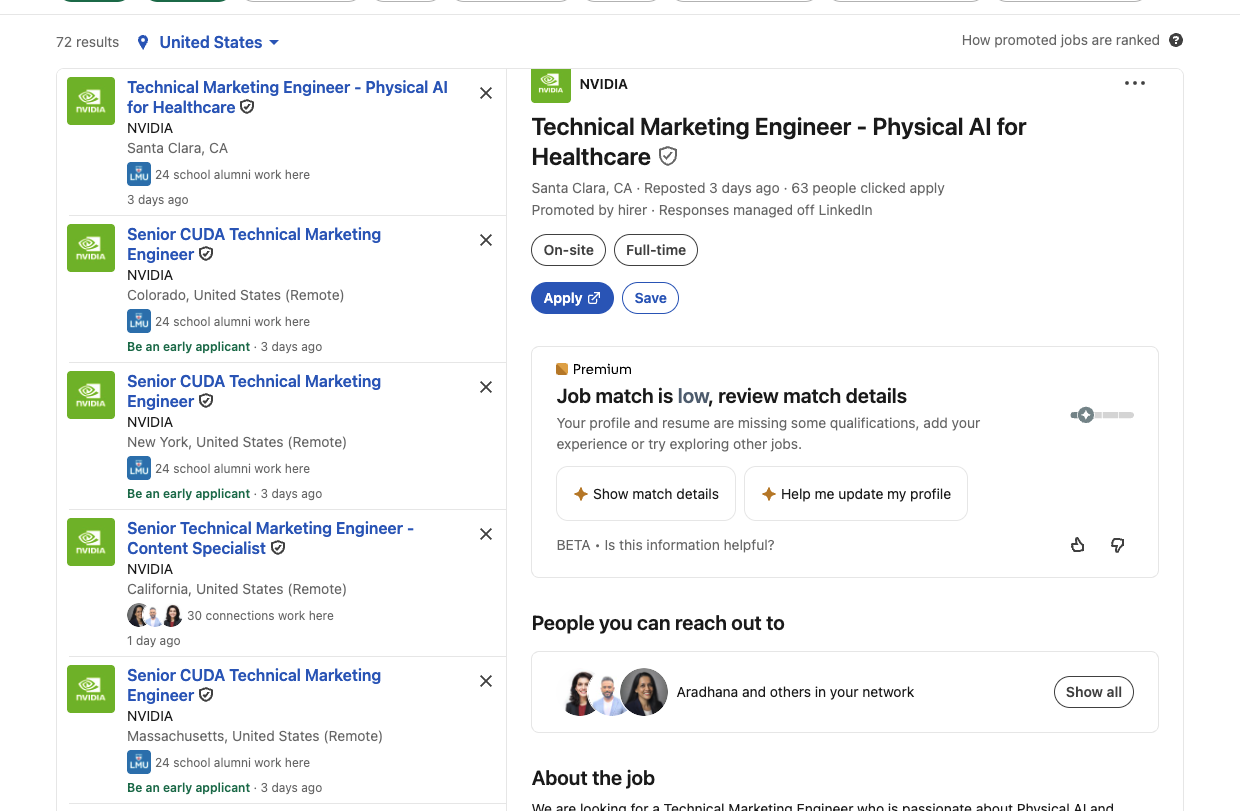
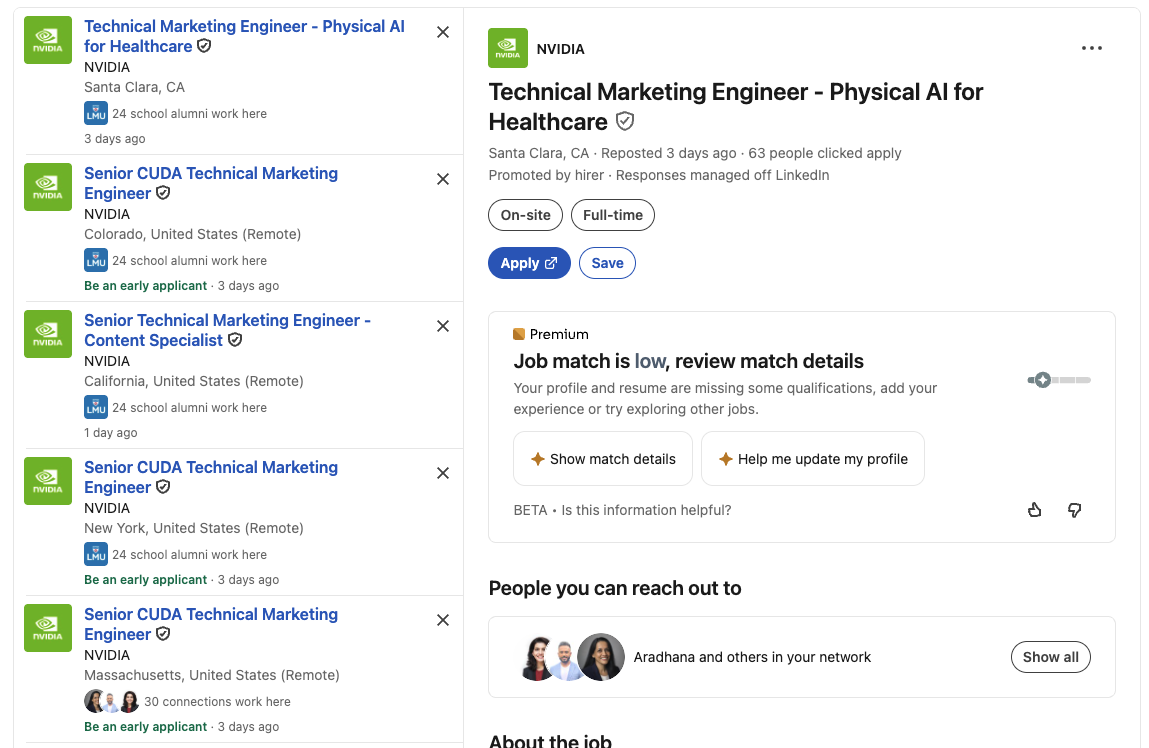
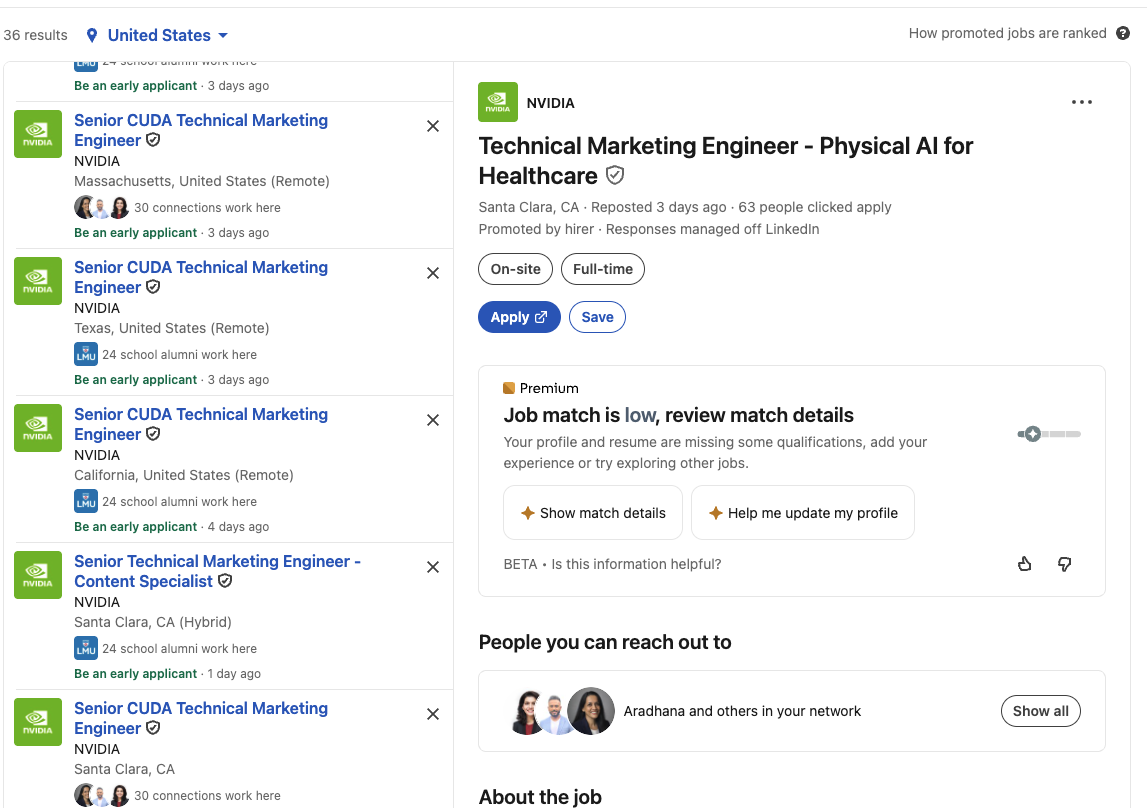
NVIDIA just posted 76 marketing engineer positions. Figma posted 3 this week. Harvey AI posted 2. Their biggest competitor, Legora, posted their own. And when the biggest players in the game start hiring aggressively for a role that barely existed five years ago, the rest of the market follows — fast.



The role is called a marketing engineer. And it is not a fad, a buzzword, or a Silicon Valley experiment. It is the convergence of every marketing, engineering, data, and AI skill into a single professional — and it is becoming the most valuable technical role in the market that most people have never heard of.
This blog is going to tell you exactly what marketing engineers do, what they earn, why the demand is structural and permanent, and most importantly — whether you are positioned to become one.
What Is a Marketing Engineer?
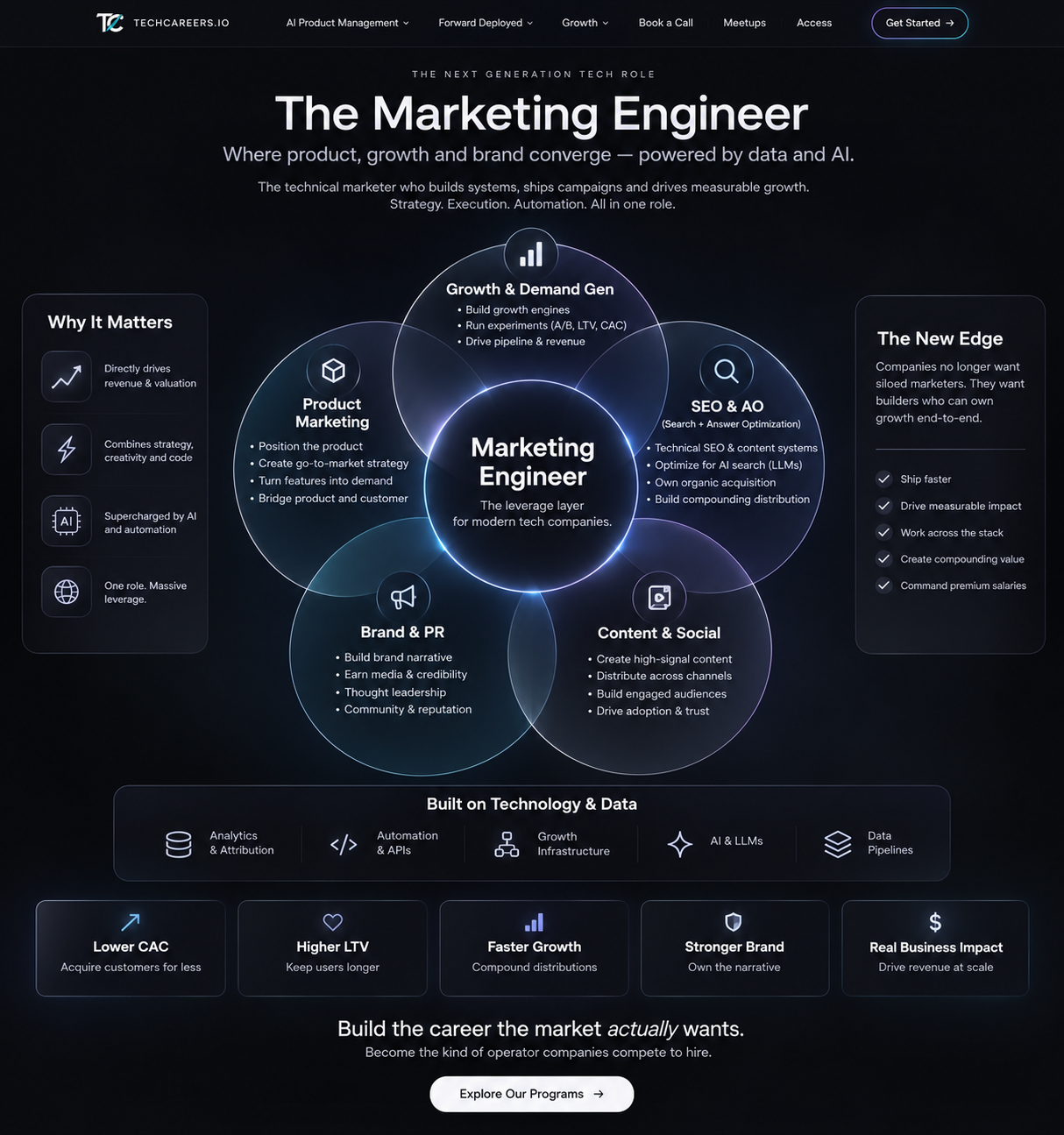
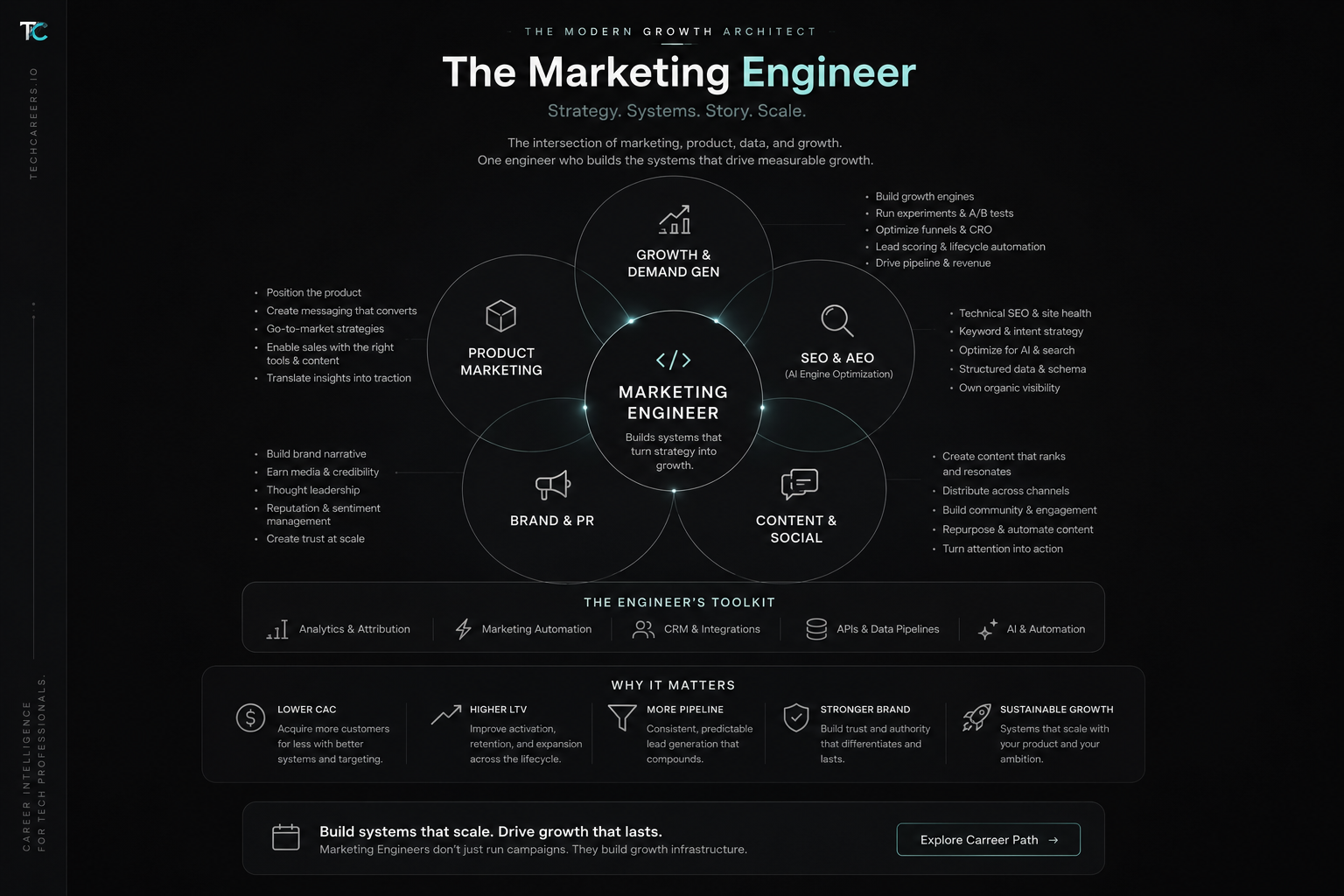
A marketing engineer — sometimes called a Marketing Technologist, Growth Engineer, or Technical Marketing Engineer — operates at the intersection of software engineering, data analytics, and digital marketing strategy.
They are not purely engineers. They are not purely marketers. They are the professionals who build, integrate, and maintain the technical infrastructure that enables marketing teams to track, analyze, automate, and scale their campaigns — while simultaneously understanding the business, the customer, and the story deeply enough to make all of that technical work actually produce revenue.
Traditional marketers focus on creative strategy, messaging, and campaign design. Marketing engineers write the code and build the data pipelines that turn those strategies into automated, data-driven systems that run at scale without requiring a human to execute every step.
But here is what most descriptions of this role get wrong.
The technical skills are the easier half. The harder half — and the half that almost nobody talks about — is the marketing half. The ability to understand a customer deeply. To tell a story that moves someone to act. To communicate data not just analytically but narratively. To train non-technical teams on AI tools. To build a network that opens doors no resume ever will.
The engineers who try to become marketing engineers without developing the marketing half of the role fail. The marketers who develop just enough technical fluency to build and deploy real systems succeed — and they succeed at an extraordinary level.
That is the most important thing to understand about this role before you read another word.
What Marketing Engineers Actually Do
Core Responsibilities
MarTech Stack Integration
Marketing engineers connect disparate marketing platforms — CRMs, Customer Data Platforms like Segment and mParticle, email service providers, and ad platforms — via custom APIs, webhooks, and ETL pipelines so customer data flows seamlessly across systems without manual intervention.
Data Engineering and Tracking Infrastructure
They set up advanced event tracking via tag management systems, server-side tracking, or custom JavaScript and Python SDKs. They build data models in tools like BigQuery or Snowflake and ensure data privacy compliance under GDPR and CCPA requirements.
Personalization and A/B Testing Engines
Marketing engineers build custom experiment frameworks or integrate tools like Optimizely and LaunchDarkly to run server-side and client-side A/B tests — delivering dynamic, personalized experiences at scale.
Automation and Lead Workflows
They write scripts and workflow logic to automate complex multi-channel customer journeys, automated lead scoring, programmatic content generation, and ad-spend optimization.
Technical SEO and Site Performance
They optimize web architecture, page render speeds, structured data, and core web vitals to ensure high search visibility and smooth conversion paths — including AEO and GEO optimization for AI-powered search engines.
AI Agent Architecture
In 2026, marketing engineers are increasingly responsible for building the data access layers, API connectors, and Model Context Protocol servers that give AI agents access to clean, structured customer data — enabling autonomous marketing workflows that would have required a team of ten people just three years ago.
What Does a Typical Day and Week Look Like?
Because this is still a relatively new role, most marketing engineers are the first hire doing this work at their company. That means you are not stepping into a defined playbook — you are writing it.
A typical week looks like this:
Monday morning begins with a sprint planning session — reviewing what marketing campaigns are launching that week and identifying the technical dependencies. You are working across teams simultaneously: marketing needs a new landing page A/B test, data analytics needs the conversion event fixed, and the CRM sync broke over the weekend.
By Tuesday you are deep in code — writing a Python script that pulls customer segment data from Snowflake and pushes it to HubSpot via API so the email team can trigger personalized sequences without touching the database manually.
Wednesday is stakeholder communication. You are presenting the results of last week's A/B test to the growth team — not just the statistical output, but the story behind it. Why did variant B win? What does that tell us about how our customers make decisions? What should we build next based on what we learned?
Thursday is infrastructure. You are building a new server-side tracking pipeline because iOS privacy restrictions have made browser-based attribution unreliable. This is weeks of work that will recover attribution data the marketing team has been losing for months.
Friday is AI. You are prototyping a Model Context Protocol server that will give your company's AI agent access to product catalog data, pricing, and customer preference history — enabling it to generate personalized outreach without hallucinating details that do not exist.
And woven through all of it — constantly — is content. Recording a Loom walkthrough of the pipeline you just built. Writing a LinkedIn post about what you learned from the A/B test. Hosting a training session for the marketing team on how to use the new AI tool you deployed. Building in public so companies can see not just what you built, but how you think and how you communicate.
That last part — the content, the communication, the building in public — is not optional. It is the difference between a marketing engineer who gets hired and one who does not.
The Salary Numbers — What Marketing Engineers Actually Earn
Let us talk about money directly, because this is likely what made you click on this article in the first place.
The compensation data is not subtle.
| Role | Entry to Mid-Level (2–4 yrs) | Senior (5+ yrs) | Total Comp (Equity + Bonus) |
|---|---|---|---|
| Marketing Engineer | $105,000–$135,000 | $145,000–$185,000+ | $170,000–$240,000+ |
| Growth Engineer | $110,000–$140,000 | $150,000–$190,000+ | $180,000–$250,000+ |
| Traditional Digital Marketer | $55,000–$75,000 | $80,000–$110,000 | $90,000–$130,000 |
| Traditional Brand and PR Manager | $50,000–$70,000 | $75,000–$100,000 | $85,000–$115,000 |
| Content Marketing Manager | $55,000–$75,000 | $75,000–$100,000 | $85,000–$115,000 |
| SEO Specialist | $45,000–$65,000 | $70,000–$95,000 | $80,000–$110,000 |
| Email Marketing Manager | $50,000–$70,000 | $75,000–$95,000 | $85,000–$110,000 |
| Software Engineer (Generalist) | $100,000–$130,000 | $140,000–$175,000 | $160,000–$220,000 |
Marketing engineers earn 40 to 70 percent more than traditional digital marketers. At Series B and beyond, total compensation including equity frequently exceeds $240,000. And at AI-native companies — where the implementation gap is driving extraordinary demand — these numbers are moving higher.
The traditional marketing roles in that table are not growing. They are contracting. Routine campaign setup, basic reporting, and execution-heavy marketing work is being automated. The professionals who built careers around those functions are facing the most significant displacement since the internet replaced print advertising.
The professionals who move up the stack — who develop the technical and AI skills to build the systems rather than operate them — are entering one of the strongest seller's markets in the history of the profession.
Marketing Engineer vs. Every Other Role — The Honest Comparison
Marketing Engineer vs. Software Engineer
A software engineer builds the product or service that customers pay for. A marketing engineer builds the tools, integrations, tracking systems, and AI infrastructure that drive growth, acquisition, and customer retention around that product.
The key difference is orientation. Software engineers are product-oriented. Marketing engineers are revenue-oriented. Every system a marketing engineer builds is measured against a business outcome — conversion rate, pipeline velocity, attribution accuracy, customer acquisition cost. That direct connection to revenue is why marketing engineers are increasingly harder to cut during economic downturns than generalist software engineers.
Marketing Engineer vs. Digital Marketer
A digital marketer designs campaigns, writes ad copy, sets strategy, and manages creative. A marketing engineer builds the technical engine that collects campaign data, automates campaign execution, and makes the data actually trustworthy.
The digital marketer says "run this campaign." The marketing engineer builds the infrastructure that ensures the campaign can be measured, optimized, and scaled — and increasingly, the infrastructure that allows AI agents to run the campaign autonomously.
Marketing Engineer vs. Growth Engineer
Growth engineers focus specifically on product-led growth experiments inside the product application itself — referral loops, onboarding flows, viral mechanics, in-product notifications. Marketing engineers cover the broader marketing-to-sales ecosystem — the external channels, the data pipelines, the attribution systems, and the automation infrastructure that connects marketing activity to revenue.
In practice, at most companies these roles overlap significantly. Both are technical. Both are revenue-oriented. The primary distinction is the surface area they operate on — product interior versus marketing exterior.
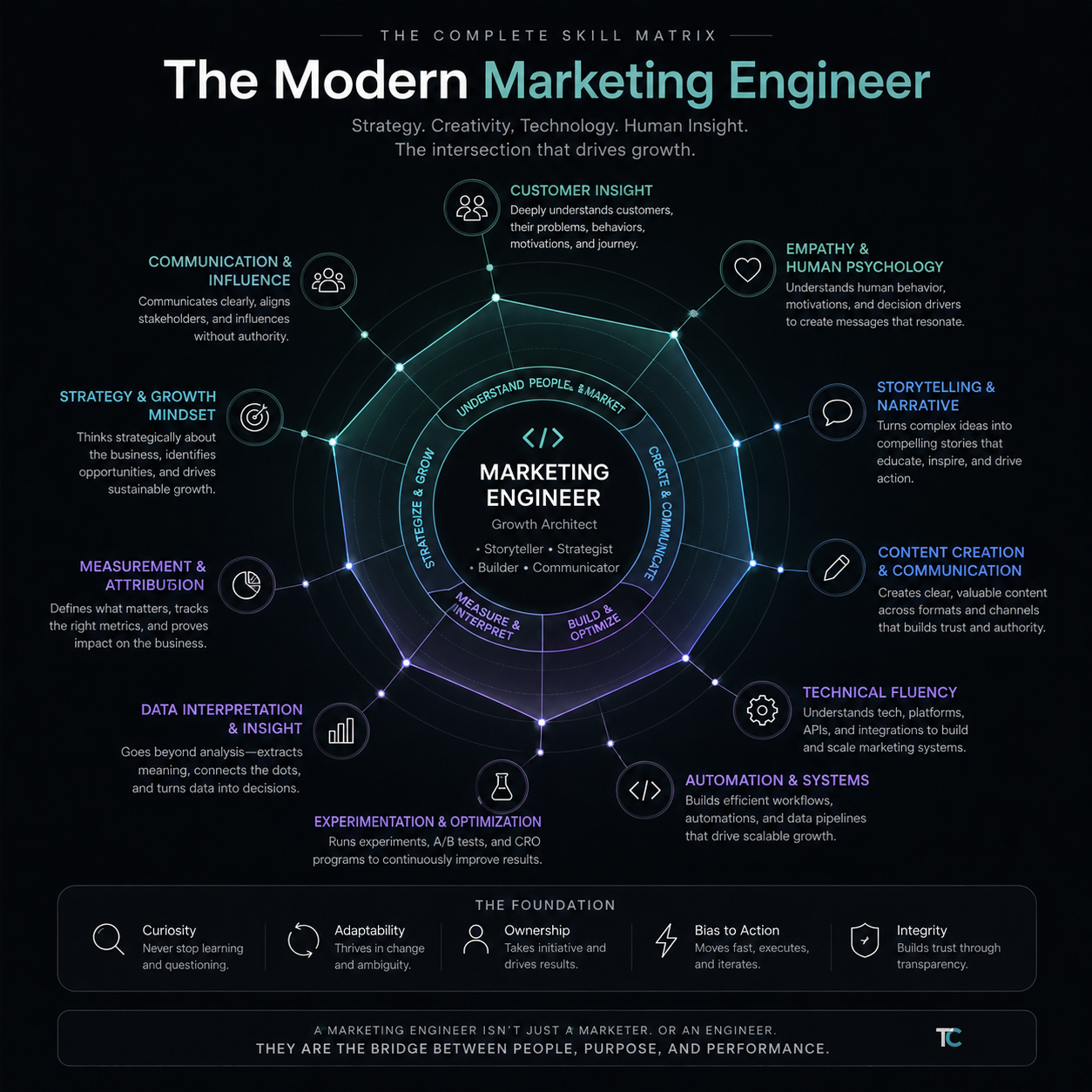
The Skills Matrix — What Actually Makes a Rockstar Marketing Engineer
The standard skills list you will find online — data analysis, SEO, programming, marketing automation — is not wrong. It is just incomplete. And the part it leaves out is the most important part.
The best marketing engineers are marketers first. The engineering skills are learnable. The understanding of human beings — why they make decisions, what stories move them, what they actually need — is the harder and more valuable skill.
Here is the complete skills matrix:
| Skill Domain | What It Actually Requires | Why It Matters More Than Most Lists Admit |
|---|---|---|
| Customer Obsession | Deep empathy for buyer psychology, decision-making patterns, and emotional triggers | Every technical system you build must serve a human outcome — without this, you build technically correct things that nobody uses |
| Storytelling and Narrative | The ability to translate data into a story that moves people to act | The best A/B test result in the world means nothing if you cannot communicate why it happened and what to do next |
| Data Interpretation | Not just analyzing data — understanding what it is telling you about human behavior | The analysis is the easy part. The insight is what separates marketing engineers who drive growth from ones who produce reports |
| Content Creation | Writing, video, live training, building in public | Your work needs to be visible. Marketing engineers who create content get hired faster and paid more than those who do not |
| AI Tool Fluency | Using and training others on Claude, ChatGPT, Cursor, and agentic tools | The ability to deploy AI tools and train non-technical teams on them is rapidly becoming a baseline expectation |
| Programming | JavaScript/TypeScript, Python, SQL — at a functional production level | You need to write real code. Not copy-paste snippets. Real, deployable, maintainable code. |
| Data Engineering | BigQuery, Snowflake, dbt, server-side tracking pipelines | The infrastructure layer that makes marketing analytics trustworthy instead of approximate |
| MarTech Ecosystem | Segment, HubSpot, Braze, Salesforce, GTM, Meta Conversions API | You need to know the tools, their APIs, and how to connect them without creating data silos |
| Experimentation | A/B testing frameworks, statistical significance, multivariate testing | Growth comes from systematic experimentation — not intuition |
| Network Building | Genuine professional relationships with hiring managers, engineers, and marketers | In a field this new, who you know still opens doors that resumes cannot |
| Interpersonal Communication | The ability to work across engineering, marketing, product, and executive stakeholders simultaneously | Marketing engineers sit at the intersection of multiple departments — poor communication kills the role |
The engineers who fail at marketing engineering almost always fail on the top half of that matrix. The marketers who struggle fail on the bottom half. The professionals who succeed develop both sides — and they develop them simultaneously, not sequentially.
Why Demand Is Structural — And Why This Is Not Going Away
This is not a fad. This is not a cycle. This is a permanent structural shift in how technology companies operate — and the evidence is overwhelming.
The Death of Third-Party Cookies and Privacy Regulations
Apple's App Tracking Transparency update, GDPR, CCPA, and the ongoing deprecation of third-party tracking have made browser-based analytics fundamentally unreliable. Companies can no longer understand their customers using simple pixels. They need complex server-side tracking pipelines and first-party data infrastructure — Customer Data Platforms, data clean rooms, identity resolution systems — that require real software engineers to build and maintain.
MarTech Tool Fatigue
The global marketing technology landscape grew from approximately 150 tools in 2011 to over 14,000 in 2026. Every tool promised to solve a problem. Most of them created new ones. Companies are now drowning in data silos, broken integrations, and fragmented customer profiles. They are hiring marketing engineers to unify these systems through custom APIs, webhooks, and reverse-ETL pipelines — because adding another subscription has stopped working.
The Rise of Autonomous AI Agents
Marketing teams are transitioning from manual campaign execution to AI-driven workflows. But AI models need clean, structured, real-time data and reliable API access to function. Marketing engineers build the data access layers, the Model Context Protocol servers, and the API connectors that provide that context. Without them, AI tools hallucinate, produce generic output, and fail to deliver the ROI companies are paying billions for.
The Timeline That Proves This Is Permanent
| Period | Era | What Was Happening |
|---|---|---|
| 2011–2015 | The Tool Explosion | Marketing technology was largely no-code SaaS. Non-technical marketers configured tools directly in web browsers. |
| 2016–2020 | The Growth Engineering Boom | Tech companies realized growth came from rapid A/B testing and viral product loops embedded in code. The term "Growth Engineer" emerged at Uber, Airbnb, and Dropbox. |
| 2021–2023 | The Data Infrastructure Shift | Privacy laws pushed companies to move tracking into cloud data warehouses. Engineering skills became mandatory for basic marketing analytics. |
| 2024–2026 | The AI and Context Engineering Era | Focus shifted to building AI-ready data infrastructure, automated agent workflows, and structured feeds for generative search engines and AI agents. |
Each phase made the previous phase's skill set insufficient. Each phase raised the floor for what it takes to be effective in marketing. The floor is now code, data, AI, and storytelling — simultaneously.
You Are Not Too Early. You Are Right On Time.
The most common objection I hear from professionals considering this transition is: "Am I too early? Is this going to be a real thing?"
You are not too early. You are in the sweet spot — and here is exactly why.
We are transitioning from the Early Adopter phase — where only elite tech companies like Google, Meta, and Stripe had marketing engineers — to the Early Majority phase, where mid-market SaaS companies, e-commerce platforms, and enterprise businesses are realizing they need this talent to survive the cookieless world and build AI-driven workflows.
NVIDIA posting 76 marketing engineer roles is not a pilot program. It is a signal. When a company of that scale makes that move that aggressively, the rest of the market follows within 12 to 18 months. The bar is lower right now than it will be in two years. The competition is thinner right now than it will be in two years. The salaries are higher now — relative to competition — than they will be once the market catches up.
The professionals who move now are the ones who build the moat. The ones who wait are the ones who compete against a more qualified, more credentialed pool for the same number of roles.
There is no version of this where waiting is the right strategic move.
The Convergence Nobody Is Talking About
Here is the uncomfortable truth that most career advisors will not tell you.
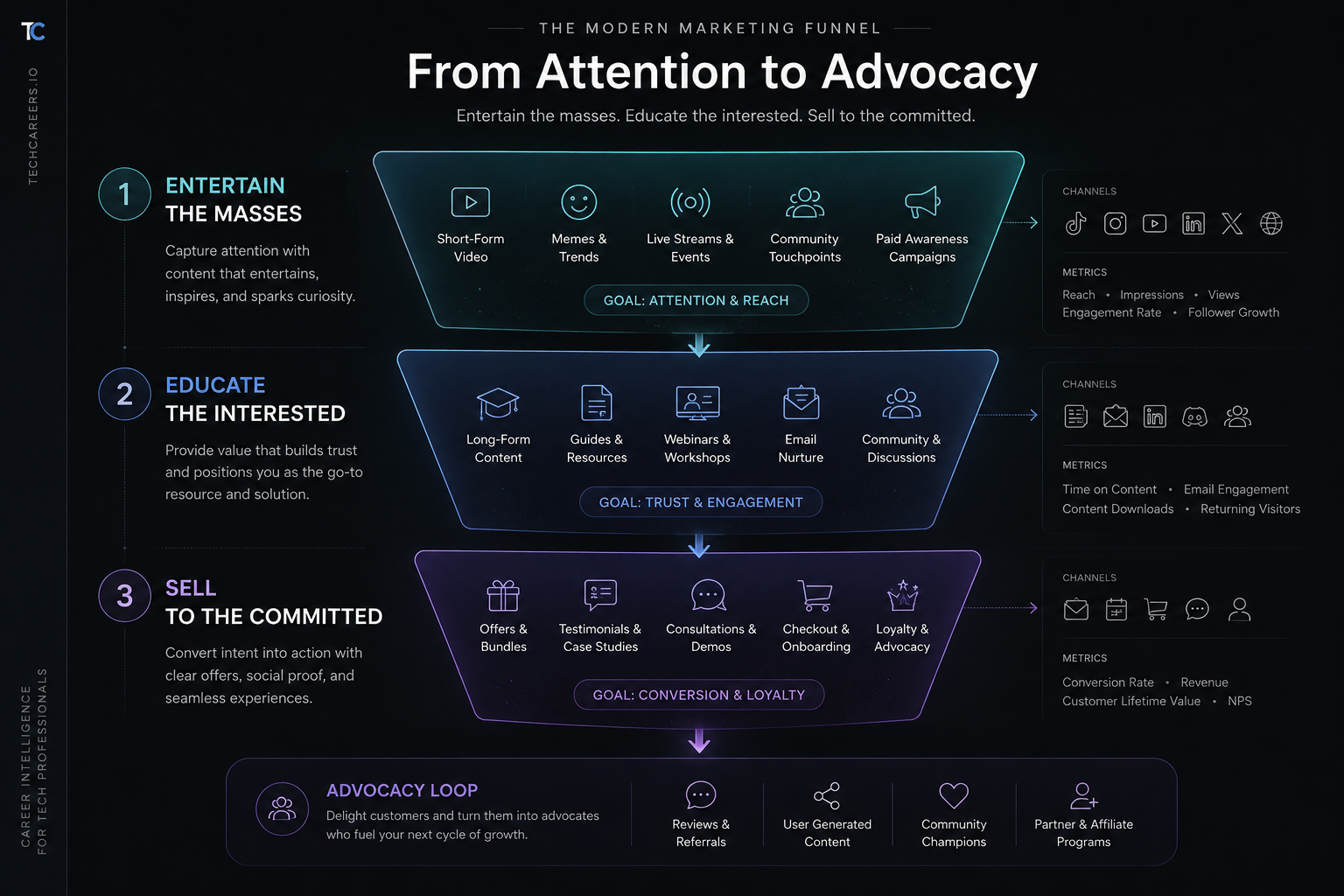
Every role in marketing — across every function, across every industry — is converging on the same place. You need to be able to build. You need to be able to tell stories. You need to create content. You need to train others on AI. You need to develop a network.
Not one of these. All of them.
The professional who only runs ads will be replaced by an AI that runs ads better, faster, and cheaper. The professional who only writes copy will be replaced by an LLM that writes copy at scale. The professional who only analyzes data will be replaced by an analytics agent that never sleeps.
The professional who can build the system, tell the story, create the content, train the team, and build the relationships — that professional becomes more valuable as everything around them gets automated.
Playing one position in today's market is the most dangerous career strategy available to you. The game has changed. The players who adapt win. The players who insist on specializing in a role that AI is actively replacing will find themselves on the wrong side of a very permanent market shift.
The Transition Roadmap — How to Get There
Phase 1 — Bridge the Fundamental Skill Gap (Weeks 1 to 4)
If you are a software engineer:
Learn the core growth metrics first. Master how customer acquisition cost, lifetime value, retention cohorts, conversion rate, and multi-touch attribution are calculated and what they mean for business decisions. Map the modern GTM data stack — warehouse-native CDPs, reverse ETL, server-side tagging, and API integrations.
If you are a marketer:
Go deep on SQL before anything else. Move past basic SELECT queries to CTEs, window functions, and data transformations. Then learn real JavaScript and Python — DOM manipulation, fetch API requests, webhooks, and asynchronous logic. Master Git and basic deployment workflows.
Phase 2 — Build the Core Infrastructure Toolkit (Weeks 5 to 8)
Build a custom server-side event dispatcher that routes user events to Google Analytics 4, Meta Conversions API, and a SQL data warehouse simultaneously. Set up an automated pipeline that reads customer data and updates CRM profiles via API. Build a client-side A/B testing flag system that delivers personalized components without degrading page speed.
Phase 3 — Modernize for the AI Era (Weeks 9 to 12)
Build a Model Context Protocol server that securely feeds structured customer metadata to an LLM. Write scripts that validate Schema.org structured data and generate optimized JSON-LD and llms.txt configurations for AI answer engines. This is where the certification becomes critical — the Claude Certified Architect Foundations exam specifically prepares you for this layer of the stack.
Phase 4 — Land the Role (Weeks 13 and Beyond)
Build a public GitHub repository showcasing a full-stack growth project — a serverless web app with server-side analytics, an A/B testing engine, and automated CRM sync. Frame every resume bullet around business outcomes, not technical tasks. Host webinars. Record YouTube videos. Build in public so hiring managers can see not just what you built but how you think and communicate.
The Biggest Lie Stopping Most Professionals From Making This Move
The lie is: "I am not technical enough."
It is a lie because the learning curve has been compressed by 50 to 90 percent by AI tools. What used to take years to learn now takes months. What used to require a computer science degree now requires consistency, a good learning system, and the willingness to build in public while you are still learning.
And more importantly — the professionals who are waiting until they feel technical enough are going to arrive at a market that is more competitive, more credentialed, and less forgiving than the one that exists today.
There are two choices. Make the push up now when the bar is low and the roles are new and the demand dramatically exceeds the supply. Or wait until later when the bar is higher, the competition is greater, and the window has partially closed.
Every month you wait is a month your competitors are building skills, building portfolios, building networks, and building the moat that will separate them from you when you finally decide to move.
The urgency is real. The opportunity is real. And the time is now — not next quarter, not next year. Now.
What To Do Next
The path to becoming a marketing engineer starts with one conversation.
Reach out to me directly on LinkedIn. Tell me where you are right now — your current role, your background, and where you want to be. We will have an honest conversation about whether the TechCareers.io program is the right fit for your specific situation.
The program includes the Claude Certified Architect Foundations certification — which we are adding as an add-on to our AI Product Management and Forward-Deployed Engineering programs because marketing engineering is not a separate career path from those roles. It is a skill layer that every technical professional needs to develop. Companies are going to look very favorably on professionals who hold this certification alongside their AI PM or FDE credentials.
Here is what the process looks like:
One — reach out to me on LinkedIn to schedule a strategy call.
Two — get your Claude Certified Architect Foundations certification and start building your portfolio in public so companies can evaluate not just your credentials but your thinking, your communication, and your culture fit.
Three — host and record content. YouTube videos. Webinars. Live trainings. Building in public is not optional — it is the portfolio.
We have been saying this over and over again because it is the approach that works. The professionals in our community who are following this process are the ones getting contacted by 7 to 13 additional recruiters per week, landing roles in 43 to 60 days, and building income streams that compound over time.
The market for marketing engineers is open right now. The roles are real. The salaries are extraordinary. The window to get in early — before the competition catches up — is closing.
Do not wait.
Connect with Richard Chen on LinkedIn: linkedin.com/in/richard-chen-082b868a
Learn more about the TechCareers.io AI GTM Accelerator and AI PM and FDE programs: techcareers.io
Please share this article — we will be posting more content and hiring referrals for marketing engineer roles starting this week.
By Richard Chen | TechCareers.io | © 2026 TechCareers.io. All rights reserved.